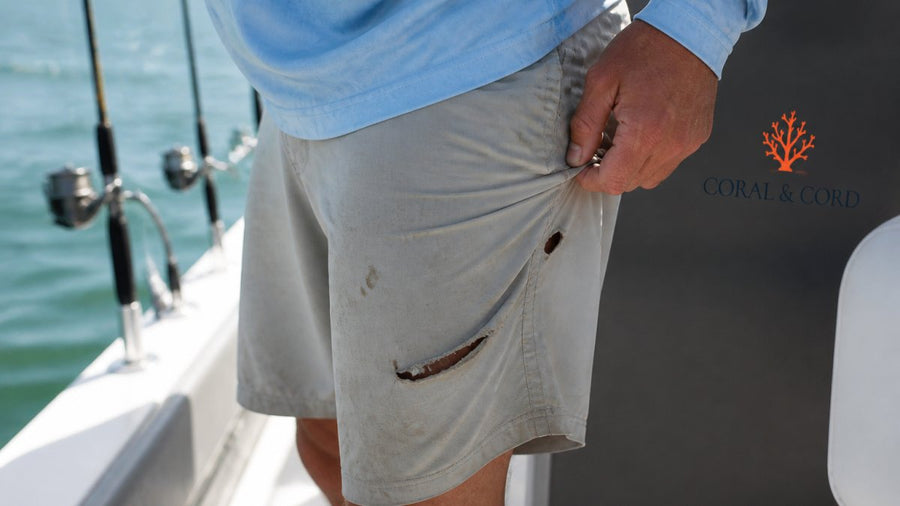
7 Signs Your Fishing Shorts Won't Survive Saltwater
Last Updated: October 29, 2026
Quick Summary
Durable saltwater fishing shorts are mid-weight polyester-nylon blends with a durable water repellent finish and four-way stretch, plus double-stitched or flatlock seams, bar-tacked stress points and non-corrosive hardware. Avoid cotton, which holds salt against your skin and dries slowly, and rinse in cool fresh water after every trip.
- Salt crystals left in fabric act like tiny abrasive blades, sawing through fibres as you move.
- A good pair of saltwater fishing shorts should feel dry within roughly 15 to 30 minutes in warm coastal air.
- Look for double-stitched or flatlock seams at the seat, inner thigh and crotch, with bar-tacked stress points.
- Bare steel hardware corrodes in saltwater within weeks, so choose plastic, coated metal or marine-grade stainless.
- Rinse in cool fresh water after every trip, hand wash with mild detergent and air dry in the shade.
Table of Contents
- Why Saltwater Destroys Cheap Fishing Shorts
- What Are Fishing Shorts Made Of? Materials That Matter
- The Best Fabric for Fishing Shorts in Saltwater Conditions
- Durability Checks: What Separates Saltwater Fishing Shorts From the Rest
- Fit, Mobility and Pocket Security on the Water
- How to Wash Fishing Shorts After Saltwater Use
- Value, Cost Per Wear and What to Ignore
- Join the Tide: Choosing Saltwater Fishing Shorts That Last
- Frequently Asked Questions
Why Saltwater Destroys Cheap Fishing Shorts
Salt is the quiet killer of cheap fishing apparel. Salt crystals left in fabric act like tiny abrasive blades, sawing through fibres every time you move, while repeated wet-dry cycles stiffen seams and rot stitching from the inside out.
This guide breaks down how to spot durable fishing shorts for saltwater before you spend money on gear that won't last.
Here's what most buyers get wrong: they judge shorts by how they feel in the shop, not by how they behave after ten saltwater sessions.
What Are Fishing Shorts Made Of? Materials That Matter
Fishing shorts are commonly made from synthetic performance fabrics, such as polyester and nylon blends, chosen for quick drying, strength and resistance to water damage. Cotton is a poor choice here. It soaks up water, holds salt against your skin and dries slowly, which is exactly what you don't want on a boat.
The material composition tells you most of what you need to know before you even try a pair on. Look for:
- Polyester: Light, fast-drying and holds colour well in sun
- Nylon: Stronger and more abrasion-resistant, ideal for rock hopping
- Spandex or elastane blends: Add stretch for mobility without sagging
A common mistake is buying stretchy shorts with no structural reinforcement. Stretch without strength means the fabric gives where it should hold.
The Best Fabric for Fishing Shorts in Saltwater Conditions
A mid-weight polyester-nylon blend with a durable water repellent finish and four-way stretch is a common choice for saltwater fishing shorts, as it balances drying speed, abrasion resistance and freedom of movement.
Weight matters more than most people realise. Too light and the fabric wears through at the seat and thighs. Too heavy and it holds water and dries slowly.
Quick-Dry Fabrics and Drying Times
Quick-dry fabric moves moisture to the surface so it evaporates fast. In practice, a good pair of saltwater fishing shorts should feel dry within roughly 15 to 30 minutes in warm coastal air after a soaking.
Test this in-store if you can: wet a corner of the fabric and time how long it takes to feel dry to the touch.
Sun Protection and UPF Ratings
UPF ratings measure how much UV radiation passes through fabric, and a higher number means more protection. For long days on exposed water, look for a stated UPF rating rather than vague "sun protective" marketing.
If you want to judge whether sun-protective clothing genuinely holds up on the water, read our breakdown of whether UPF clothing actually works in Australian waters.
Durability Checks: What Separates Saltwater Fishing Shorts From the Rest
Durable saltwater fishing shorts differ from ordinary shorts in four places: seam construction, hardware, fabric weight and stress-point reinforcement. Most cheap pairs fail at one of these, usually the seams. But a checklist alone won't tell you how a pair will behave after ten trips, so here is the saltwater-specific test criterion we use to judge whether construction actually holds up.
How salt, rinsing and sun attack each component
Salt crystals left in fabric act as an abrasive, and every wet-dry cycle draws them deeper into the weave. Repeated rinsing in fresh water is necessary, but it also flexes seams and flushes out any finish that was only surface-applied. UV exposure then breaks down unprotected fibres and fades dye. A pair that passes a shop-floor inspection can still fail this cycle within a season if the construction is wrong.
Test criteria for seams and stitching
Look for double-stitched or flatlock seams at the seat, inner thigh and crotch. Flatlock seams sit flatter against the skin, which reduces chafing when wet and lowers the chance of a seam catching on tackle or rock. Bar-tacked stress points where pockets and belt loops meet the fabric are a minimum. A common failure pattern is a single row of stitching at the crotch that gives way after repeated crouching; a reinforced gusset spreads that load across a wider panel.
Test criteria for hardware and trims
Non-corrosive hardware means plastic, coated metal or marine-grade stainless, never bare steel. A cheap zip or metal eyelet will corrode in saltwater within weeks and can stain the fabric around it. Check that drawcords are sealed at the ends, that eyelets are coated, and that any metal button is backed away from direct salt contact.
Test criteria for fabric weight and abrasion panels
Mid-weight fabric is the sweet spot: light enough to dry quickly, heavy enough to resist wear at the seat and thighs. Abrasion-resistant panels at the seat and thighs add life where you sit, slide and clamber. Colourfast dye that survives sun and salt without fading is a bonus, but it is secondary to seam and hardware integrity.
A practical field test you can run yourself
Before you commit to a pair, wet a corner of the fabric and time how long it takes to feel dry to the touch.
Run this checklist before you buy:
- Double-stitched or flatlock seams at the seat, inner thigh and crotch
- Bar-tacked stress points where pockets and belt loops meet fabric
- Non-corrosive hardware such as plastic or coated metal, never bare steel
- Reinforced gusset for freedom of movement and reduced seam strain
Hardware is often overlooked. For a deeper look at construction standards, see our guide to durable fishing apparel for offshore conditions.
Here is the checklist we run through before buying any pair of saltwater fishing shorts.
| Check | What to look for | Why it matters |
|---|---|---|
| Seams | Double-stitched or flatlock at seat, inner thigh, crotch | Flatlock reduces chafing when wet |
| Stress points | Bar-tacked where pockets and belt loops meet fabric | Minimum reinforcement against pulling |
| Gusset | Reinforced gusset at the crotch | Spreads load during repeated crouching |
| Hardware | Plastic, coated metal or marine-grade stainless | Bare steel corrodes in saltwater within weeks |
| Fabric weight | Mid-weight, with abrasion panels at seat and thighs | Light enough to dry, heavy enough to resist wear |
| Dye | Colourfast, survives sun and salt | Secondary to seam and hardware integrity |
| UPF rating | Stated rating built into the fibre | Coatings can wash out |
Fit, Mobility and Pocket Security on the Water
Fit and mobility decide whether you actually enjoy a day on the water. Shorts that bind at the hip restrict casting and climbing, while loose, floppy pairs snag on tackle and ride up when you sit. The difference between fishing shorts and casual shorts is not the label; it is how the waistband, inseam, stretch and storage behave when you are wet, crouched and moving.
Waistband design and wet fit
A waistband that stays put when wet is the foundation of mobility. Look for a partly elasticated waist or a drawcord that can be tensioned without digging in. Flat-front waistbands with belt loops are fine for boat work, but a drawcord is more reliable when the shorts are soaked and heavier. Avoid waistbands with exposed metal hardware against the skin; coated or plastic components reduce corrosion and chafing.
Inseam, stretch and movement for casting and wading
Inseam length changes how the shorts behave. Shorter inseams free the knee for deep crouching and wading, while longer inseams with an articulated knee suit boat work and rock hopping where abrasion protection matters more. Four-way stretch helps, but stretch without structural reinforcement means the fabric gives where it should hold. A gusseted crotch is the single most useful mobility feature because it removes the seam that otherwise strains during casting and climbing.
Pocket security and fishing-specific storage
Pocket security is the most overlooked feature. Standard five-pocket designs look smart but spill phones and pliers the moment you crouch.
Assess storage against what you actually carry: phone, pliers, line clippers, a small tackle box or keys. Secure closures should be operable with wet hands, and zips should be coated or plastic rather than bare metal.
Protection trade-offs in hot, exposed conditions
Shorts are not full protection. In hot, exposed conditions, the trade-off is between airflow and coverage. Shorts keep you cooler, but they leave the lower legs exposed to sun and abrasion, so pair them with sun protection and consider longer clothing when you are rock hopping or spending hours on open water. If you want to judge whether sun-protective clothing genuinely holds up on the water, read our breakdown of whether UPF clothing actually works in Australian waters.
How to Wash Fishing Shorts After Saltwater Use
Rinse your fishing shorts in cool fresh water immediately after every saltwater trip, then hand wash with a mild detergent and air dry in the shade.
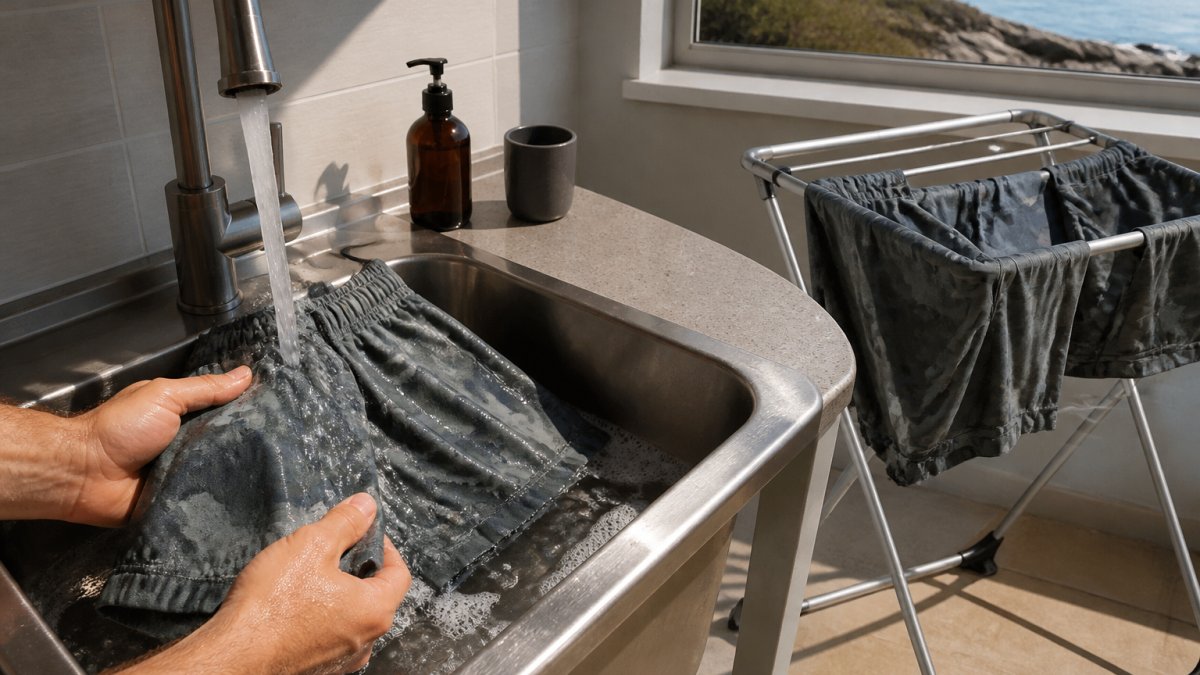
A simple routine:
- Rinse thoroughly in cool fresh water to dissolve salt
- Hand wash with a small amount of mild, non-biological detergent
- Skip fabric softener, which coats fibres and reduces breathability
- Air dry in the shade, never on a hot radiator or in direct sun
- Check zips and pockets for trapped sand before storing
For a detailed method, follow this step-by-step guide to cleaning salt from apparel, and for broader care advice see our notes on how to wash performance fishing gear.
Machine washing on a hot cycle with softener can damage quick-dry fabric and reduce any water-repellent finish.
Value, Cost Per Wear and What to Ignore
Value in fishing shorts comes down to cost per wear, not sticker price. A cheaper pair that falls apart after one season costs more per trip than a well-made pair that lasts several years.
What to ignore: bold "saltwater resistant" labels with no detail, camouflage patterns sold as a performance feature, and any pair that lists cotton in the blend.
Weighing up whether to spend more? See our guide on whether expensive fishing gear is worth it.
Join the Tide: Choosing Saltwater Fishing Shorts That Last
Many shorts sold for the water are not built to withstand saltwater conditions.
At Coral & Cord, we build reef-inspired fishing apparel for people who spend real time on the water. Coral & Cord's range is built around reef-inspired designs, construction built for adventure, and comfort designed for life on the water.
Join the Tide for launch updates and exclusive launch offers from Coral & Cord.
Frequently Asked Questions
Are quick-dry shorts suitable for fishing?
Yes, and they are usually the better choice. Quick-dry fabrics, typically polyester or nylon blends, shed water fast and dry in the sun rather than staying damp against your skin for hours. For saltwater fishing shorts, look for a fabric that dries quickly, a stated UPF rating, and reinforced stitching at the crotch and hems. Avoid cotton, which holds salt and moisture and breaks down quickly in coastal conditions.
What fabric is best for saltwater fishing shorts?
Polyester and nylon are the two strongest options for saltwater fishing shorts. Polyester is often chosen for colour retention, while nylon is commonly noted for abrasion resistance. Many quality pairs use a polyester-spandex blend for stretch and mobility. Check for a stated UPF rating and flatlock or double-stitched seams, since salt crystals can work into loose stitching over time.
How do you wash saltwater out of fishing shorts?
Rinse your fishing shorts in fresh cool water immediately after every saltwater trip, before the salt dries into the fibres. Then machine wash on a cold, gentle cycle with a mild detergent, no fabric softener, and no bleach. Hang them in the shade to dry rather than in direct sun, which fades colour and degrades elastic. Avoid leaving them bundled wet in a bag or bucket, as salt and mildew can damage fabric.
How can you stop fishing shorts from fading in the sun?
Fading comes from UV exposure and salt residue left in the fabric. Wash after every trip to remove salt, dry in the shade rather than full sun, and choose shorts with a stated UPF rating and a colourfast finish. Turning them inside out before washing also reduces surface abrasion that dulls the finish.
