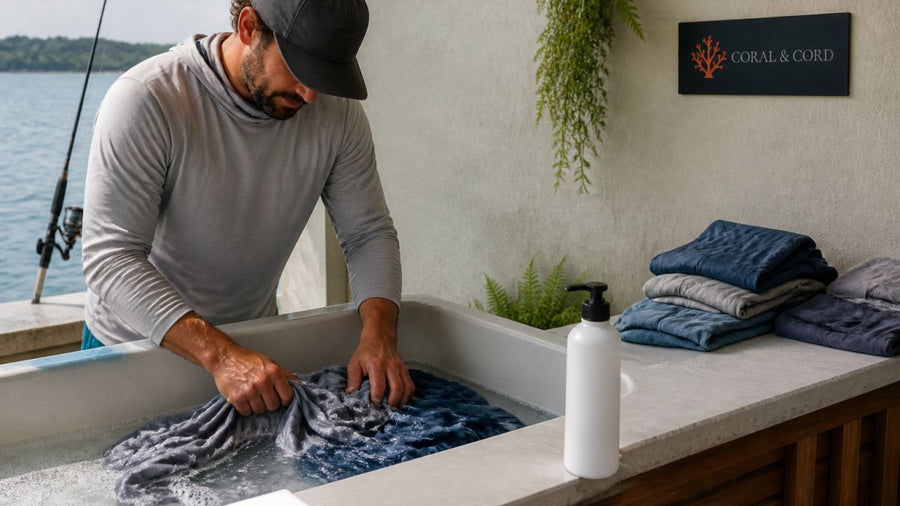
How to Wash Performance Fishing Gear
Table of Contents
- Why Proper Care Matters for Performance Fishing Gear
- What You'll Need Before Washing
- How to Wash Performance Fishing Gear Step by Step
- How to Wash Fishing Shirts Without Damage
- How to Remove Fish Blood Stains from Clothes
- How to Remove Fish Smell from Clothes
- How to Dry Performance Fishing Clothes Correctly
- Common Mistakes to Avoid
- Frequently Asked Questions
Last Updated: October 10, 2026
Why Proper Care Matters for Performance Fishing Gear
Proper care of your performance fishing gear directly impacts how long it lasts and how well it performs. Salt water, sweat, and fish residue break down fabrics over time. Washing your gear correctly prevents this damage and keeps colours vibrant.
Many anglers treat their fishing clothes like regular laundry. This is a mistake. Performance fishing gear uses technical fabrics that need specific care. Washing it wrong can strip protective coatings, fade reef-inspired designs, and reduce the fabric's ability to repel water and UV rays.
At Coral & Cord, we design fishing shirts and apparel built to last through years of water-based adventures. But even the best-made gear needs proper maintenance.
The good news: proper washing takes only a few extra steps. Once you know the right process, it becomes routine. Your gear will look newer longer and perform better every time you're on the water.
What You'll Need Before Washing
Gather these items before you start:
- Mild detergent, use a gentle, non-bleach formula
- Cool water, cold is better than warm
- Soft brush, for pre-treating stains without damaging fabric
- Mesh washing bag, protects delicate fabrics in the machine
- Vinegar, white vinegar removes fish smell naturally
- Baking soda, absorbs stubborn odours
- Stain remover, for blood and organic stains
- Towels, for drying (avoid direct heat)
Using the right supplies matters. Harsh detergents and hot water damage technical fabrics. A mesh bag protects your gear during machine washing and keeps zips and Velcro from catching on other clothes.
Don't skip the vinegar and baking soda. These natural products work better than perfumed fabric sprays at removing the smell of fish. They're also gentler on the environment and on your gear's protective coatings.
How to Wash Performance Fishing Gear Step by Step
Learning how to wash performance fishing gear properly takes about 15 minutes total. Follow these steps in order for best results.
Step 1: Rinse Away Salt and Debris
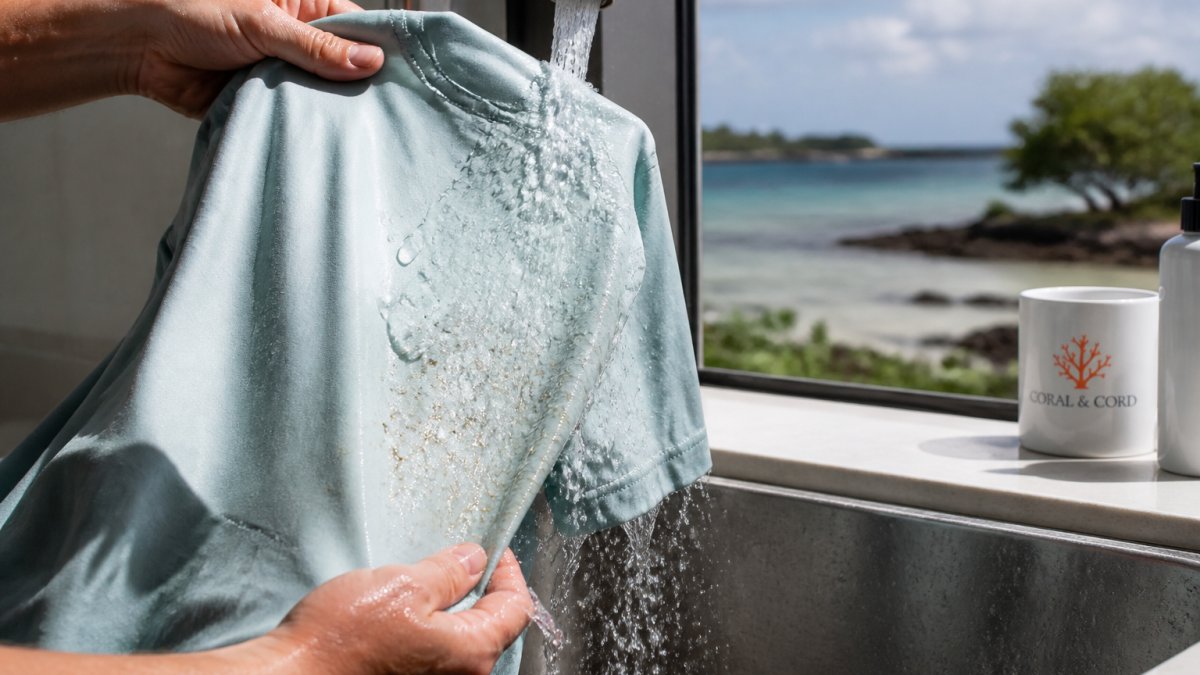
Start by rinsing your gear under cool running water immediately after use. Don't wait. Salt dries on fabric and becomes harder to remove the longer it sits.
Hold the garment under the tap and let water run through it. Pay special attention to seams, cuffs, and collar areas where salt collects. Use your fingers to gently rub fabric together, this helps loosen debris without damaging the material.
Rinse until the water runs clear. This single step removes most salt and prevents it from damaging fabric during washing. It also reduces the smell that builds up over time.
Step 2: Pre-treat Stains
Examine your gear for stains before washing. Fish blood, rust, and algae leave marks that regular washing won't remove. Treating them now saves time later.
For blood stains:
- Use cool water, never hot (hot sets protein stains)
- Apply stain remover directly to the mark
- Let it sit for 10-15 minutes
- Gently rub with a soft brush
For rust or mineral stains:
- Mix vinegar and water (1:1 ratio)
- Apply to the stain
- Wait 20 minutes
- Rinse thoroughly
Don't rub aggressively. Gentle pressure works better on technical fabrics. Aggressive scrubbing can damage the weave and reduce water resistance.
Step 3: Machine Wash on the Right Cycle
Place your gear in a mesh washing bag. This protects delicate seams and zips. Use cold water and select the delicate or gentle cycle.
Add mild detergent, use less than you normally would. Technical fabrics don't need much soap. Excess detergent leaves residue that traps moisture and reduces breathability.
Machine settings to use:
- Water temperature: cold (under 20°C)
- Cycle: delicate or gentle
- Spin: low or medium
- Detergent: half your normal amount
Avoid fabric softener. It coats technical fabrics and blocks their ability to wick moisture away from your skin. This defeats the purpose of performance gear.
Wash with similar colours only.
How to Wash Fishing Shirts Without Damage
Fishing shirts are made from technical fabrics that perform better than cotton. These materials need gentler handling than everyday clothes.
The key difference: fishing shirts often have UPF coatings, water-repellent treatments, and moisture-wicking fibres. Harsh washing removes these protective properties. Gentle washing preserves them.
Follow the steps above, but add one extra precaution. After the gentle cycle finishes, rinse the garment one more time by hand under cool water. This removes any remaining detergent that could leave a film on the fabric.
Never wring or twist fishing shirts. Instead, gently squeeze water out by pressing the fabric against the side of the sink. Wringing damages fibres and can create permanent creases.
How to Remove Fish Blood Stains from Clothes
Fish blood is one of the toughest stains to remove from fishing gear. The proteins in blood bond to fabric fibres, especially in warm water. Cool water is essential.
Act quickly. Fresh stains are easier to remove than dried ones.
For fresh blood stains:
- Rinse immediately under cool running water
- Apply a stain remover designed for protein stains
- Let it sit for 15-20 minutes
- Gently rub the stain with a soft brush
- Rinse thoroughly under cool water
- Repeat if needed before washing
For dried blood stains:
- Soak the garment in cool water for 30 minutes
- Mix equal parts white vinegar and water
- Apply the mixture to the stain
- Let it sit for 20-30 minutes
- Gently rub with a soft brush
- Rinse under cool water
- Wash as normal
Vinegar works because it breaks down the protein structure in blood. This is why it's more effective than detergent alone for this type of stain.
Never use hot water or bleach on blood stains. Hot water sets the stain permanently. Bleach damages coloured fabrics and can weaken technical coatings.
How to Remove Fish Smell from Clothes
Fish smell clings to fabric because of organic compounds that water alone won't remove. Detergent helps, but natural solutions work better and are gentler on your gear.
Method 1: Vinegar soak
White vinegar neutralises fish odour naturally. Mix one part vinegar with four parts cool water. Soak your gear for 30-60 minutes before washing. Rinse thoroughly. The vinegar smell fades as the fabric dries.
Method 2: Baking soda treatment
Baking soda absorbs odours instead of masking them. Sprinkle it directly on damp fabric after rinsing. Let it sit for 15-20 minutes. Brush off and wash as normal.
Method 3: Combined approach
For stubborn smell:
- Rinse with cool water
- Soak in vinegar solution for 30 minutes
- Rinse thoroughly
- Sprinkle baking soda on damp fabric
- Let sit 20 minutes
- Brush off
- Wash on gentle cycle
Don't use fabric softener or scented sprays. These mask the smell temporarily but don't remove it. The odour returns after a few wears. Natural solutions actually eliminate the smell.
How to Dry Performance Fishing Clothes Correctly
How you dry your gear matters as much as how you wash it. High heat damages technical fabrics and protective coatings. Air drying is always the best choice.
Proper drying steps:
- Gently squeeze excess water out (don't wring)
- Lay flat on a clean towel or hang on a line
- Choose a well-ventilated area with indirect sunlight
- Avoid direct heat sources (radiators, tumble dryers, direct sun)
- Allow 4-8 hours to dry completely
Flat drying works best for most fishing gear. Lay your shirt on a clean, dry towel. Smooth out wrinkles gently. This prevents stretching and maintains the garment's shape.
Hanging works for some items. Use a padded hanger to avoid shoulder marks. Make sure air can circulate around the entire garment.
Never use a tumble dryer. The heat damages water-repellent coatings and can melt synthetic fibres. Even low-heat settings are too hot for technical fabrics.
If you need your gear dry quickly, use a fan to increase air circulation. This speeds drying without heat damage.
Common Mistakes to Avoid
Even experienced anglers make washing mistakes that damage their gear. Here's what to watch out for:
Using hot water
Hot water opens fabric fibres and allows detergent to penetrate too deeply. It also sets stains permanently and damages protective coatings. Always use cool or cold water.
Overloading the washing machine
Cramming too much gear into one load prevents proper rinsing. Detergent residue stays on fabric and traps moisture. Wash fewer items per load.
Skipping the rinse after stain treatment
Leaving stain remover on fabric can damage colours or leave marks. Always rinse thoroughly after treating stains.
Using bleach or fabric softener
Bleach fades colours and weakens technical coatings. Fabric softener creates a waterproof barrier that prevents moisture-wicking. Avoid both entirely.
Drying in direct sunlight
UV rays fade reef-inspired designs and can damage synthetic fibres. Always dry in shade or indoors.
Washing with heavy items
Washing fishing shirts with jeans or towels creates friction that damages delicate fabrics. Keep your performance gear separate.
Waiting too long to wash
Salt and fish residue become harder to remove the longer they sit. Wash your gear within 24 hours of use for best results.
Ignoring the care label
Your Coral & Cord gear comes with specific washing instructions. Follow them.
Frequently Asked Questions
Can you put fishing shirts in the washing machine?
Yes, most performance fishing shirts can go in the washing machine on a gentle or delicate cycle with cold water. Always check the care label first. Use mild detergent and avoid fabric softener, which can damage UPF coatings and water-repellent finishes. Turn the shirt inside out to protect the outer surface, and wash separately from heavy items to prevent snagging.
How do you remove fish smell from clothes?
Soak the garment in a solution of one part white vinegar to four parts cold water for 30 minutes before washing. Alternatively, add half a cup of baking soda to your regular wash cycle. Ensure thorough rinsing and air-dry. Avoid the tumble dryer until the smell is completely gone.
Should you use fabric softener on UPF fishing shirts?
No, avoid fabric softener entirely. It coats the fabric fibres and reduces the effectiveness of UPF protection and water-repellent treatments. It can also trap odours and reduce breathability. Stick to mild detergent and cold water for best results in maintaining your gear's protective qualities.
How often should you wash fishing clothes?
Rinse your gear with fresh water after every outing to remove salt and debris. Do a full wash every 2-3 outings or whenever you notice visible stains or odour. Excessive washing can wear out protective coatings, so balance cleanliness with durability. Air-dry between trips to extend time between full washes.
Proper care transforms how long your performance fishing gear lasts. A few extra minutes of careful washing protects your investment and keeps your gear looking and performing like new. At Coral & Cord, we build fishing apparel designed for durability and style, but that durability depends on you washing it correctly. Follow these steps, and your reef-inspired gear will be ready for your next water adventure. Join the Tide and discover fishing apparel built to last.