
Sustainable Australian Made Fishing Wear: 2026 Guide
Table of Contents
- Why Sustainable Australian Made Fishing Wear Is Worth the Investment
- Australian-Made Fishing Shirts: What the Label Actually Means
- UPF 50+ Fishing Shirts: Sun Protection That Survives the Wash
- Recycled Fabric Fishing Shirts: Performance Without the Virgin Plastic
- How to Choose Fishing Clothes That Last More Than One Season
- Sustainable Australian Made Fishing Wear: A Quick Comparison
- Caring for Your Sustainable Fishing Wear So It Goes the Distance
- Conclusion: Gear That Matches Your Commitment to the Water
- Frequently Asked Questions
Last Updated: 8 October 2026
Why Sustainable Australian Made Fishing Wear Is Worth the Investment
Sustainable Australian made fishing wear is apparel designed and produced locally using lower-impact materials and ethical manufacturing, built to handle long days on the water. At Coral & Cord, we build reef-inspired fishing clothing for individuals passionate about life on the water. The case for buying local and sustainable comes down to three things: durability, sun protection that holds up, and a supply chain you can actually trace.
Cheap gear fails at the worst moment. A seam splits mid-cast, a zip corrodes after one season, or the fabric thins out and stops blocking UV. Better-made clothing costs more upfront, but it replaces the cycle of rebuying every summer.
That's the argument for investing rather than replacing. Now let's look at what the labels actually claim.
Australian-Made Fishing Shirts: What the Label Actually Means
Australian-made fishing shirts carry a specific legal meaning, not just a marketing phrase. The country-of-origin labelling framework administered by the Australian Competition and Consumer Commission sets out when a business can claim a product was "made in" a country. For most apparel, that means the item was substantially transformed locally, not simply assembled from imported fabric.
Here's where it gets murky. A shirt can be cut and sewn here while the fabric is woven overseas, and still legitimately claim Australian-made status. That's not a loophole; it's how the rules work. What matters is whether the transformation happened onshore.
For buyers, the practical move is to read the fine print. Look for a clear statement of what was made here versus what was imported. Brands that hide behind vague phrasing usually have something to hide.
UPF 50+ Fishing Shirts: Sun Protection That Survives the Wash
UPF 50+ fishing shirts block at least 98% of UV radiation, and the rating is governed by an Australian standard rather than a loose marketing claim. The Australian Radiation Protection and Nuclear Safety Agency explains how UV radiation affects skin and why rated clothing matters for people who spend hours outdoors.
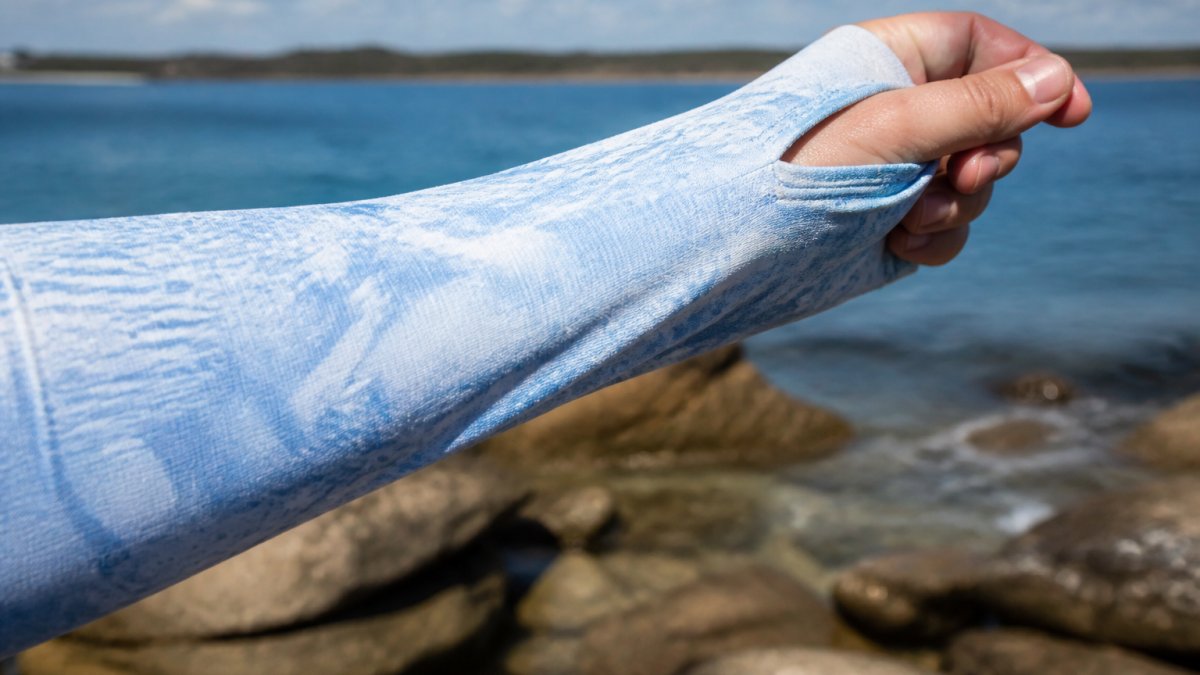
The catch is that UPF ratings can degrade. Stretching, repeated washing, and chlorine all wear down the fabric's ability to block UV. A shirt rated UPF 50+ when new might drop well below that after a couple of hard seasons.
What preserves the rating:
- Wash in cold water and avoid fabric softeners, which coat the fibres
- Skip the dryer; line-dry in shade to protect the weave
- Retire any shirt that's visibly thin, stretched, or faded in high-wear areas
Treat the rating as a starting point, not a lifetime guarantee.
Recycled Fabric Fishing Shirts: Performance Without the Virgin Plastic
Recycled fabric fishing shirts are made from fibres reclaimed from post-consumer waste, often plastic bottles, and spun into performance yarn. The pitch is simple: the same moisture-wicking, quick-drying behaviour as conventional synthetics, without the demand for newly manufactured plastic.
Does it perform as well? In practice, yes, for most fishing use. Recycled polyester behaves much like its virgin counterpart in terms of weight, drying speed, and durability. The difference is upstream, in what the material is made from.
The honest limitation is longevity. Recycled synthetics can still shed microfibres in the wash, and they're not infinitely recyclable. Buying fewer, better pieces and caring for them well matters more than the recycled label alone.
How to Choose Fishing Clothes That Last More Than One Season
Choosing fishing clothes that last comes down to inspecting construction and material weight before you buy. Most people focus on colour and cut. The gear that survives is chosen on the details.
Check these before you commit:
- Stitching: Look for double-stitched or reinforced seams at stress points. Single stitching fails first.
- Zips and hardware: Corrosion-resistant zips and non-rusting buttons matter in saltwater. Cheap metal is the first thing to go.
- Fabric weight: Heavier weaves resist abrasion better but dry slower. Match the weight to your activity.
- Fit: A shirt that's too tight stretches and loses its UPF rating faster. Room to move protects the fabric.
- Thumb loops and collars: High collars and thumb loops cover the neck, hands, and wrists, the areas most often missed.
A common mistake is buying for looks alone and discovering the seams give out after a few trips. Inspect the build first.
Sustainable Australian Made Fishing Wear: A Quick Comparison
Here's how the main fabric and construction choices stack up against each other.
| Option | Sun Protection | Durability | Environmental Impact | Best For |
|---|---|---|---|---|
| Recycled synthetic | High (UPF 50+) | Good with care | Lower virgin plastic use | Most fishing and water sports |
| Conventional synthetic | High (UPF 50+) | Good | Higher virgin plastic use | Budget-focused buyers |
| Natural fibre blends | Moderate | Varies | Biodegradable | Light activity, cooler days |
| Australian-made construction | Depends on fabric | Higher (better QC) | Shorter supply chain | Buyers prioritising local and traceable |
The pattern is clear: fabric choice drives sun protection and environmental impact, while construction quality drives how long the garment lasts. The best gear gets both right.
Caring for Your Sustainable Fishing Wear So It Goes the Distance
Washing and storing your fishing wear correctly is what keeps the fabric, seams, and sun protection working for years. The gear doesn't fail because it's badly made; it fails because it's badly treated.
- Rinse after every saltwater trip to stop corrosion and salt build-up
- Wash cold, on a gentle cycle, with a mild detergent
- Never use fabric softener; it clogs the weave and reduces wicking
- Line-dry in shade, never in direct sun or a hot dryer
- Store folded or hung, away from damp
Treat the gear like the investment it is, and it'll outlast three cheap replacements.
Conclusion: Gear That Matches Your Commitment to the Water
The gap between disposable fishing wear and gear built to last is the gap between rebuying every season and owning something for years. That difference shows up in your wallet, your sun protection, and the footprint you leave on the water.
Coral & Cord builds reef-inspired fishing clothing for individuals passionate about life on the water. Our gear is designed for life on the water, with reef-inspired designs and construction made to handle real conditions. If you want apparel that matches your commitment to the ocean, join the Tide and get first access to launch updates and exclusive offers.
Frequently Asked Questions
What fishing clothing is actually made in Australia?
Australian-made fishing shirts carry a country-of-origin label confirming they were manufactured here, not just designed here. Look for the Australian Made logo on the garment or packaging, and check the label for details on where the fabric was knitted and the shirt was cut and sewn. Brands that make genuine claims will usually state this clearly on their website. If the label only says 'Australian designed', the manufacturing happened offshore.
Are Australian-made fishing shirts worth the price?
The higher upfront cost reflects local manufacturing wages, smaller production runs and better quality control. In practice, an Australian-made shirt with UPF 50+ rating and reinforced stitching often outlasts cheaper imports by several seasons, which lowers your cost per trip. If you fish regularly and want gear that holds its shape, colour and sun protection after repeated washing, the investment makes sense. Check the brand's website for current pricing.
Do fishing shirts need UPF protection?
Yes, especially if you spend hours on the water where UV reflects off the surface. UPF 50+ blocks around 98% of UV radiation, and that protection is built into the fabric rather than added as a coating, so it does not wash out. Look for a UPF 50+ rating on the label and choose darker colours or denser weaves for extra defence. Reapply sunscreen to exposed skin like hands, neck and face.
What is the best fabric for fishing shirts in hot weather?
Lightweight recycled polyester blends work well because they wick moisture, dry fast and hold their UPF rating without feeling heavy. Look for fabrics with a slight stretch for casting and rowing, plus mesh panels under the arms or down the back for airflow. Avoid pure cotton, which soaks up sweat and stays wet. A good shirt should feel cool in full sun and dry within minutes of a splash.