
Durable Fishing Apparel for Offshore: 2026 Guide
Table of Contents
- What Makes Fishing Apparel Durable for Offshore Conditions
- Why Moisture-Wicking Fishing Shirts Beat Cotton Offshore
- Sun Protection Fishing Clothing: What UPF Ratings Actually Mean
- Hot-Weather Fishing Gear for Long Days on the Water
- Durable Fishing Apparel for Offshore: Comparison at a Glance
- Fishing Clothes Care: Making Your Gear Last Multiple Seasons
- Why Reef-Inspired Design Belongs on Serious Offshore Gear
- Frequently Asked Questions
Last Updated: 9 October 2026
What Makes Fishing Apparel Durable for Offshore Conditions
Durable fishing apparel for offshore use is clothing built to survive salt, sun, spray and constant abrasion without losing its shape or protection. At Coral & Cord, we design reef-inspired gear around one question: will it still perform after a full season of bluewater trips? Offshore conditions punish weak construction faster than any inshore session, so the difference between gear that lasts and gear that fails comes down to a handful of measurable details. Below, we break down what actually matters, from fabric weight to seam construction, and how to tell the difference before you spend money.
Fabric Weight and Weave
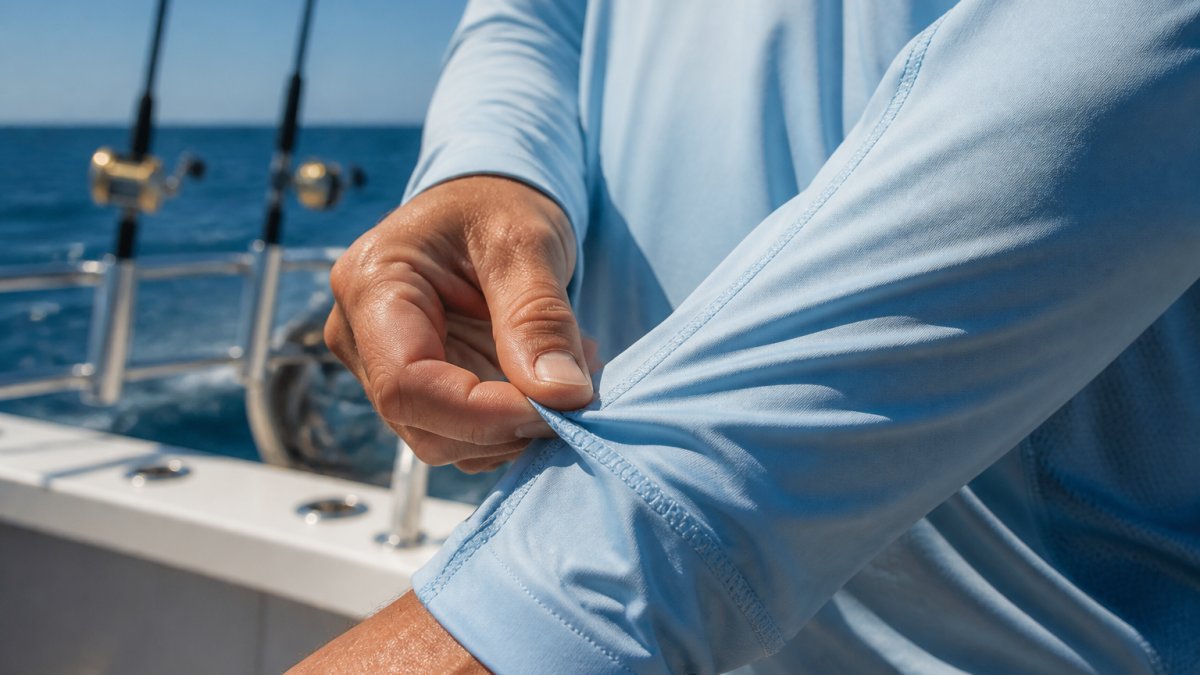
Heavier, tightly woven fabrics resist abrasion and hold their shape better than loose, lightweight weaves. For offshore work, look for a dense weave that still moves with you. A common mistake is assuming thicker always means better; a tightly woven mid-weight fabric often outlasts a bulky, loosely knit one because it resists snagging on cleats, rod guides and gunwales.
Stitching, Seams and Hardware
Flatlock and double-stitched seams handle the constant flexing of casting and hauling without pulling apart. Metal zips and press studs should be corrosion-resistant, because salt air attacks cheap hardware within weeks. Where most guides fall short is hardware: a superb fabric on a rusting zip is a shirt with a short life.
Why Moisture-Wicking Fishing Shirts Beat Cotton Offshore
Moisture-wicking fishing shirts move sweat away from your skin and dry quickly, while cotton soaks up water and stays heavy and cold. That single difference decides whether a long day offshore is comfortable or miserable. Cotton holds moisture against your body, which pulls heat away when the wind picks up and leaves you chilled even in warm conditions. Synthetic or blended performance fabrics push perspiration to the surface where it evaporates, so you stay drier through the hottest part of the day. For anyone spending hours on the water, this is not a luxury, it is basic safety and comfort. Our own range leans on these fabrics precisely because offshore trips rarely offer a chance to change clothes mid-session.
Sun Protection Fishing Clothing: What UPF Ratings Actually Mean
UPF, or Ultraviolet Protection Factor, is a rating of how much UV radiation a fabric blocks before it reaches your skin. A UPF 50 rating means the fabric allows roughly one fiftieth of the sun's UV through, which is the highest rating standardised for clothing. Two things matter here that most shoppers miss. First, the rating applies to the fabric as new, and it can drop if the garment stretches, gets wet or wears thin. Second, UPF is a fabric measure, not a sunscreen replacement for exposed skin. The Australian Radiation Protection and Nuclear Safety Agency guidance on UV and sun protection explains how UV exposure works and why clothing coverage matters. For sensitive skin, choose tightly woven, dark or bright colours and check that the rating is stated on the label rather than assumed.
Hot-Weather Fishing Gear for Long Days on the Water
Hot-weather fishing gear should prioritise breathability, coverage and quick-drying fabrics over minimal clothing. Counter-intuitively, covering up often keeps you cooler than stripping down, because direct sun heats bare skin far faster than a breathable long-sleeve layer. Look for:
- Light-coloured, loose-fitting long sleeves that allow airflow
- Ventilated panels across the back and underarms
- Quick-drying shorts or convertible trousers with reinforced knees
- A wide-brimmed hat and neck protection
- Corrosion-resistant zips and no metal that will heat up in the sun
The goal is a system, not a single item. A breathable shirt, a hat and a neck gaiter working together beat any one piece on its own during a full day offshore.
Durable Fishing Apparel for Offshore: Comparison at a Glance
Here is how the main construction choices stack up against the conditions you will actually face offshore.
| Feature | What to Look For | Why It Matters Offshore |
|---|---|---|
| Fabric weight | Tightly woven mid-weight | Resists abrasion, holds shape |
| Seams | Flatlock or double-stitched | Survives constant flexing |
| Hardware | Corrosion-resistant zips | Lasts in salt air |
| Moisture handling | Wicking, quick-drying | Keeps you dry and warm |
| Sun protection | UPF 50, tightly woven | Blocks UV through long days |
| Colour | Light or bright, dense weave | Reflects heat, blocks UV |
Use this as a checklist when comparing options. If a garment misses on seams or hardware, the fabric quality will not save it.
Fishing Clothes Care: Making Your Gear Last Multiple Seasons
Fishing clothes care comes down to three habits: rinse, wash gently, and dry out of direct sun. Salt is the enemy of stitching and hardware, so a fresh-water rinse after every trip removes the residue that quietly destroys gear. Wash performance fabrics in cool water with a mild detergent, avoid fabric softener because it clogs the wicking fibres, and never tumble dry on high heat. Hang gear to dry in the shade rather than full sun, which breaks down elastic and coatings over time. Store everything dry and folded, not crammed damp into a bag. These small routines are the difference between gear that lasts one season and gear that lasts several.
Why Reef-Inspired Design Belongs on Serious Offshore Gear
Reef-inspired design is not decoration for its own sake. The colours and patterns drawn from reef systems reflect the environments our customers actually fish, and they serve a practical purpose too: lighter, brighter tones reflect heat and offer better UV coverage than dark, densely dyed fabrics. At Coral & Cord, we build gear that looks like it belongs on the water while doing the job offshore demands. That combination of performance and identity is why our customers keep coming back, and it is the reason we design for people who care about both how their gear performs and what it stands for.
Frequently Asked Questions
What should you wear for offshore fishing?
Start with a long-sleeved, quick-dry shirt rated UPF 50+, paired with lightweight trousers that block wind and spray. Add a breathable wide-brim hat, polarised sunglasses and fingerless gloves for grip. Avoid cotton, which holds moisture and dries slowly once wet. Layering matters: a moisture-wicking base under a light shell handles changing conditions from dawn to midday without overheating. Coral & Cord's reef-inspired range is built around this layering approach for long days on the water.
What makes fishing clothing durable?
Durability comes down to three things: fabric weight and weave, seam construction, and hardware quality. Look for tightly woven synthetics like polyester or nylon blends, flatlock or double-stitched seams, and corrosion-resistant zips. Reinforced shoulder and elbow panels extend life significantly. Salt, UV and constant movement break down weak stitching fast, so the construction matters more than the label on the front.
How do you protect fishing clothes from saltwater?
Rinse gear in fresh water after every trip, ideally within a few hours of returning. Salt crystals abrade fibres and corrode zips, so a quick soak and air dry prevents long-term damage. Turn garments inside out, use a mild detergent sparingly, and never leave wet gear bundled in a bag. For fishing clothes care, avoid fabric softeners, which coat the fibres and reduce moisture-wicking performance over time.
Is long-sleeved sun protection fishing clothing better offshore?
Yes, for most offshore conditions. Long sleeves block UV directly rather than relying on sunscreen that sweats off within an hour. A UPF 50+ long-sleeved shirt also reduces wind chill in the early morning and protects against spray and line burn. The trade-off is heat, but modern quick-dry fabrics with mesh underarm panels manage airflow well enough for summer trips.
Offshore fishing asks a lot of your gear, and most apparel gives up long before the fish do. At Coral & Cord, we build reef-inspired fishing clothing with the fabrics, seams and hardware that hold up to salt, sun and spray, so you can focus on the water instead of your wardrobe. Join the Tide for launch updates and exclusive offers, and gear up with apparel designed for life on the water.