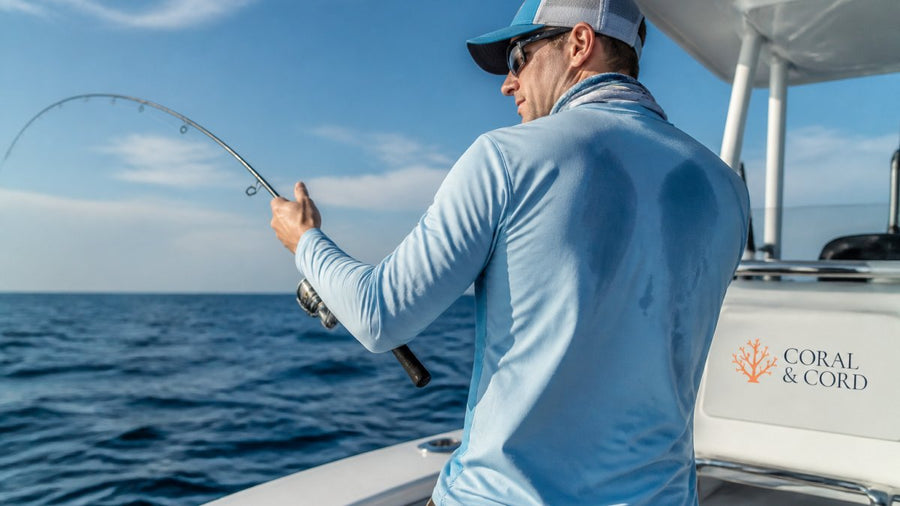
Why Choose Moisture Wicking Fishing Shirts for the Water
Table of Contents
- Why Choose Moisture Wicking Fishing Shirts: The Comfort Difference
- How Moisture Wicking Fabric Works on the Water
- Quick-Dry Fishing Shirts: From Wet to Dry in Minutes
- Fishing Shirts with Sun Protection: UPF Ratings Explained
- The Best Fabric for Fishing Shirts: A Practical Comparison
- How to Choose a Fishing Shirt That Fits Your Adventures
- Common Mistakes to Avoid with Moisture Wicking Gear
- Frequently Asked Questions
Last Updated: October 21, 2026
Why Choose Moisture Wicking Fishing Shirts: The Comfort Difference
A cotton t-shirt holds water against your skin. That is the whole problem, and it is why choose moisture wicking fishing shirts is the question we at Coral & Cord answer with every piece, built around fabric that moves sweat away instead of soaking it up.
Moisture wicking is the process of pulling sweat off your skin and spreading it across the fabric surface so it dries fast. A wet cotton shirt stays heavy and clammy for hours. A wicking shirt dries while you keep fishing.
Here is the difference that matters on a long day: you stay dry, cool and comfortable. Below, we break down how the fabric works, what to look for, and the mistakes that make good gear perform badly.
How Moisture Wicking Fabric Works on the Water
Wicking fabric moves sweat from your skin to the outer surface, where air dries it. The fibre does not absorb water the way cotton does. Instead, it channels moisture along the threads and releases it.
That matters because a wet shirt pulls heat from your body and clings to your skin. On the water, wind makes this worse. A dry surface keeps you warmer in a cool breeze and cooler in the sun.
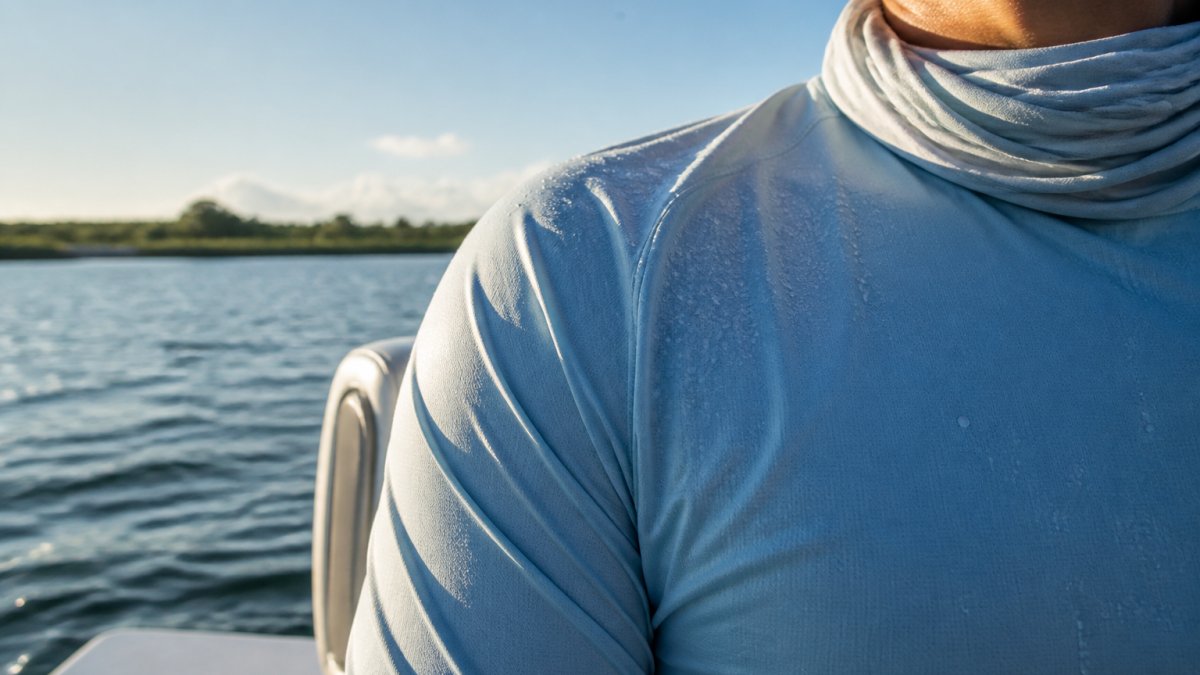
Most wicking shirts use polyester or a polyester blend. The weave is what does the work, not a coating. That is why a good wicking shirt keeps working after many washes, while a cheap one loses its feel.
Quick-Dry Fishing Shirts: From Wet to Dry in Minutes
Quick-dry fishing shirts dry fast because the fabric holds very little water in the first place. A splash, a wave or a sudden shower is a minor inconvenience, not a day-ender.
Think about what a wet shirt does to your day. It weighs you down. It chills you when the wind picks up. It stays damp for hours in the shade of a boat canopy.
Quick-dry fabric changes that. Water beads and spreads, then evaporates. Many people find a thin wicking shirt dries in the time it takes to move to the next spot.
What to look for:
- Thin, light fabric with a tight knit
- A polyester or nylon blend rather than cotton
- A label that names quick-dry or wicking performance
Fishing Shirts with Sun Protection: UPF Ratings Explained
Fishing shirts with sun protection carry a UPF rating, which measures how much UV radiation passes through the fabric. UPF 50 blocks the most UV and is the top rating you will see on a label.
Long hours on the water mean long hours in the sun. A shirt is your first line of defence, and the rating tells you how much protection you get.
A few things affect real-world protection:
- Weave tightness. Tighter knits block more UV.
- Colour. Darker colours generally block more than pale ones.
- Stretch and wear. Fabric stretched thin or worn thin lets more UV through.
- Wet fabric. Some fabrics lose protection when wet (Sun protective clothing).
Check the label for a stated UPF rating and follow the care instructions. The Cancer Council sun protection guidance is a good starting point for understanding UV and skin protection.
The Best Fabric for Fishing Shirts: A Practical Comparison
The best fabric for fishing shirts is a polyester or nylon wicking blend. These fibres move sweat, dry fast and hold their shape. Cotton is the one to avoid for active wear on the water.
Here is how the common options compare:
| Fabric | Wicks Sweat | Dries Fast | Sun Protection | Best For |
|---|---|---|---|---|
| Polyester wicking | Yes | Yes | Good with tight weave | Most fishing days |
| Nylon blend | Yes | Yes | Good | Warm, humid conditions |
| Polyester-spandex | Yes | Yes | Moderate | Active casting, kayaking |
| Cotton | No | No | Low when wet | Not recommended on water |
| Cotton blend | Limited | Slow | Low when wet | Short, dry trips only |
Polyester is the workhorse. It is light, tough and holds a wicking finish well. Nylon blends feel a little cooler and suit hot, sticky days. Spandex adds stretch for casting and paddling.
The catch is that cheap polyester can feel slick and trap odour. A better-made shirt uses a knit that breathes and a finish that resists smell.
How to Choose a Fishing Shirt That Fits Your Adventures
Choosing a fishing shirt comes down to four things: fabric, fit, sun protection and how you use it. Match the shirt to your activity and you will be comfortable all day.
Work through this checklist before you buy:
- Fabric: polyester or nylon wicking blend, not cotton
- Fit: roomy enough to cast and paddle without binding
- Sun protection: a stated UPF rating on the label
- Quick-dry: light fabric that dries fast
- Ventilation: mesh panels or a back vent for airflow
- Coverage: long sleeves and a collar for long days
- Care: easy to wash and quick to dry
If you fish, kayak and sail, pick a shirt that handles all three. A light wicking shirt with long sleeves and a collar works across the board. Our reef-inspired range at Coral & Cord is built for exactly this: life on the water, in gear that looks good and works hard.
Common Mistakes to Avoid with Moisture Wicking Gear
The biggest mistake with wicking gear is treating it like cotton. Wash it wrong, layer it wrong, or buy the wrong size, and it stops working the way it should.
A common mistake is wearing cotton underneath a wicking shirt. The cotton soaks up sweat and holds it against your skin, which defeats the whole point. Wear a wicking base layer or the shirt on its own.
Others to watch:
- Using fabric softener. It coats the fibres and blocks wicking.
- Buying too tight. A tight shirt cannot move sweat as well and restricts your cast.
- Skipping the UPF check. Not every wicking shirt has sun protection.
- Drying on high heat. High heat can damage the fabric over time.
Frequently Asked Questions
What does moisture-wicking mean in a fishing shirt?
Moisture-wicking refers to a fabric's ability to pull sweat and water away from your skin and spread it across the surface so it evaporates faster. In a fishing shirt, this means you stay drier and more comfortable even when you're active or dealing with sea spray. Unlike cotton, which holds moisture against your skin, moisture-wicking fabrics are typically made from synthetic blends like polyester or nylon that are engineered to move moisture. This keeps you cooler in the heat and reduces the chilled feeling when the wind picks up.
Are moisture-wicking fishing shirts better than cotton?
For fishing and other water activities, moisture-wicking shirts are generally better than cotton. Cotton absorbs sweat and water, becoming heavy and clinging to your skin, which can leave you feeling damp and cold. Moisture-wicking fabrics dry much faster and manage sweat more effectively. They also often include features like sun protection and odour resistance. However, cotton can be comfortable for short, low-intensity trips in dry conditions. For serious time on the water, a quick-dry fishing shirt made from moisture-wicking material is the more practical choice.
How should I wash a moisture-wicking fishing shirt?
To keep your moisture-wicking shirt performing well, wash it in cold or warm water on a gentle cycle with a mild detergent. Avoid fabric softeners and tumble dryer sheets, as they can coat the fibres and reduce wicking efficiency. Do not use bleach. Tumble dry on low or hang it to dry, but avoid high heat which can damage the fabric. Also, wash it separately from items with zips or hook-and-loop fasteners that could snag the material. Following these steps helps maintain the shirt's quick-dry and sun protection properties over time.
Do moisture-wicking fishing shirts dry quickly?
Yes, moisture-wicking fishing shirts are designed to dry quickly, often within minutes when hung in the breeze or exposed to sunlight. The fabric's construction spreads moisture over a large surface area, speeding up evaporation. This is especially useful if you get splashed or rained on. Quick-dry fishing shirts are a smart choice for multi-day trips or when you're regularly in and out of the water, as they won't stay damp and heavy like cotton. Always check the care label, but most can be worn again shortly after a quick dry.
A full day on the water asks a lot of your gear. Sweat, spray and sun all work against you, and the wrong shirt makes every hour harder. Coral & Cord builds reef-inspired fishing apparel that handles all three, with wicking fabric, quick-dry performance and sun protection in designs made for life on the water. Join the Tide for launch updates and exclusive offers, and gear up for your next trip.