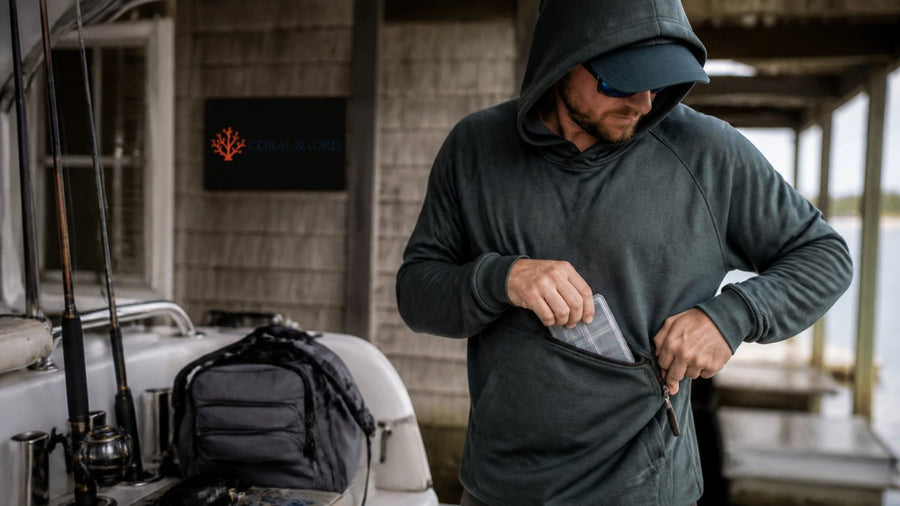
6 Fishing Hoodies With Pockets That Actually Hold Your Gear
Last Updated: November 1, 2026
Quick Summary
The best fishing hoodies use a three-zone pocket system: a zipped chest pocket for hard items, a lower hand-warmer pocket for warm fingers, and a small internal sleeve or D-ring for tools that need a leash. Zip closures are non-negotiable for anything holding a lure, a phone or car keys.
- A chest pocket sits above the waterline when you wade and stays clear of rod butts when you cast.
- A bulky chest pocket directly under a rod butt will catch your line mid-cast.
- In extreme heat with high humidity, a long-sleeve fishing shirt with a vented back keeps you cooler than a hooded top.
- A D-ring and a short lanyard keep pliers and cutters attached even if a pocket fails.
- A pocket that sits under your reel when you hold the rod will abrade the fabric within a season.
Table of Contents
- Why Fishing Hoodies With Pockets for Gear Beat a Tackle Bag
- The Pocket Layout That Makes the Best Fishing Hoodies Work
- Choosing a Fishing Hoodie for Hot Weather
- Choosing a Fishing Hoodie for Cold Weather
- Fabric and Durability: What Separates Premium From Cheap
- Fishing Shirts With Pockets: When a Hoodie Is the Wrong Call
- Five Pocket Mistakes That Cost You Gear on the Water
- Join the Tide and Gear Up for Your Next Trip
- Frequently Asked Questions
Why Fishing Hoodies With Pockets for Gear Beat a Tackle Bag
A tackle bag is one more thing to carry, one more thing to knock over, and one more thing to forget on the kitchen worktop. Fishing hoodies with pockets for gear solve that problem by putting your essentials where your hands already are. Reef-inspired fishing apparel built around that idea: gear should travel on your body, not in a bag you have to babysit.
The logic is simple. A lure box in a chest pocket is within reach while both feet stay planted on a moving deck. A bag on the floor of the boat is not. A zip pocket and a spare lure within reach can make the difference when fish are feeding close to the boat.
That said, not every pocket is worth having. A poorly placed pocket snags line, collects water, or dumps its contents the moment you lean over the gunwale. The sections below cover which layouts work, how fabric choice changes everything, and the mistakes that cost people gear every season.
The Pocket Layout That Makes the Best Fishing Hoodies Work
The best fishing hoodies use a three-zone pocket system: a zipped chest pocket for hard items, a lower hand-warmer pocket for warm fingers, and a small internal sleeve or D-ring for tools that need a leash. Anything beyond that adds bulk without adding function.
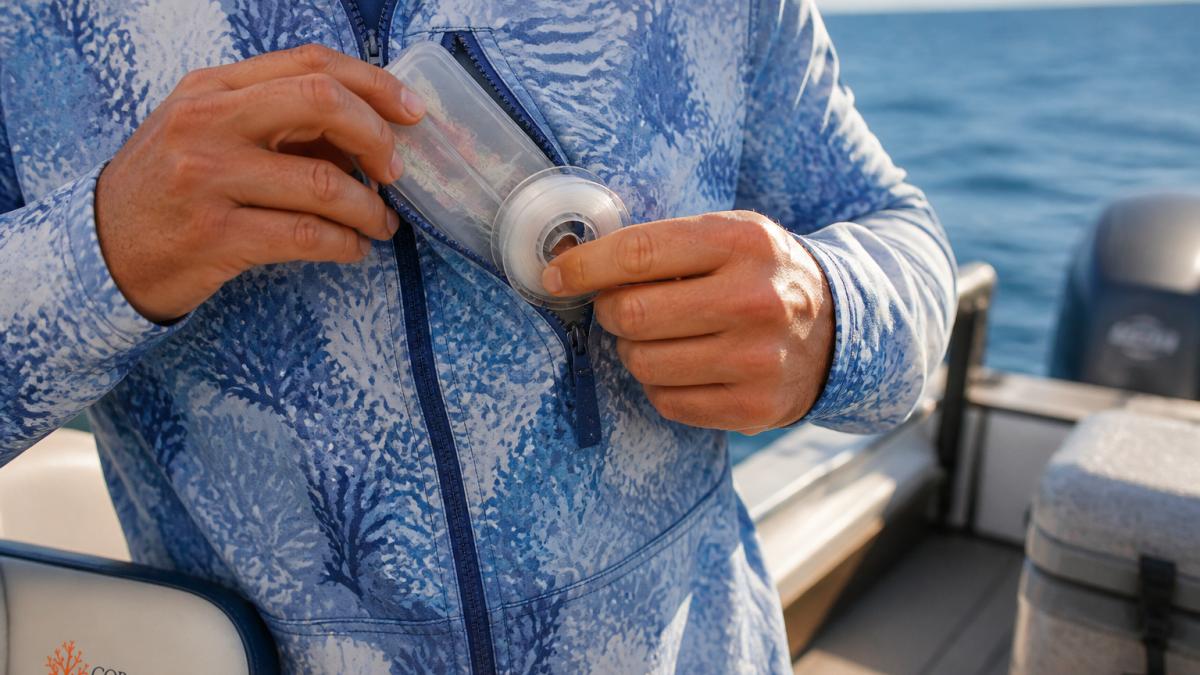
Placement matters more than pocket count. A chest pocket sits above the waterline when you wade and stays clear of rod butts when you cast. Hip pockets are comfortable but useless in a sitting position, which is most of a day in a boat. If you want the deeper detail on pullover design and cut, our buyer's guide to fishing pullovers breaks it down feature by feature.
Chest Pockets, Zip Pockets and the D-Ring Question
Zip closures are non-negotiable for anything holding a lure, a phone, or car keys. Open slash pockets are fine for a rag or a packet of soft plastics, but they shed contents the first time you bend forward. A small D-ring inside a pocket lets you clip a line cutter or pliers so they cannot drop overboard.
Watch out: a bulky chest pocket sitting directly under a rod butt will catch your line mid-cast. Check that the pocket sits high and to the side, not dead centre.
The best layouts split storage into three clear zones, each with its own job.
| Pocket zone | Best for | Key detail |
|---|---|---|
| Zipped chest pocket | Hard items such as lures, phone, keys | Zip closures are non-negotiable |
| Lower hand-warmer pocket | Warm fingers | Comfortable but useless when sitting |
| Small internal sleeve or D-ring | Tools that need a leash | Clip pliers or line cutter so they cannot drop |
| Open slash pocket | Rag or packet of soft plastics | Sheds contents when you bend forward |
Choosing a Fishing Hoodie for Hot Weather
For hot weather, the fishing hoodie for hot weather question comes down to three things: fabric weight, breathability, and sun protection that survives washing. A lightweight, quick-dry knit with a hood and built-in face coverage beats a heavier cotton blend every time.
Look for UPF-rated fabric rather than dark colour alone. A hood that covers the neck and ears matters more than the sleeve length once the sun is overhead. Mesh panels under the arms help, but only if the mesh is also rated for sun protection.
One insider note: lighter colours reflect heat, but a pale hoodie shows fish slime and bait stains fast. Choose a mid-tone print if you care about how it looks by lunchtime.
Choosing a Fishing Hoodie for Cold Weather
Cold-weather fishing hoodies trade breathability for wind resistance and a closer fit. A mid-weight fleece-lined or softshell hoodie with a full zip lets you vent when you are moving and seal up when you are idling at anchor.
The mistake most people make is buying one hoodie for all seasons. A heavy winter hoodie is unbearable by mid-morning in the subtropics, and a summer hoodie is useless in a cold snap on a southern lake.
Check the hood shape. A close-fitting hood under a rain jacket stays put; a loose hood fills with wind and flaps against your ears all day. Zip pockets matter even more in the cold, because cold hands fumble and open pockets spill.
Fabric and Durability: What Separates Premium From Cheap
Run these checks before you buy:
- Zips are branded and smooth, not stiff or gritty
- Seams are flatlock or double-stitched, with no loose threads
- Fabric feels dense and dry, not thin and clingy
- Print sits in the fabric, not on top like a sticker
- Pockets are reinforced at the corners where they take load
Salt water and UV are brutal on cheap dye. A print that fades to grey in a few months is a sign the fabric was never built for the water. If you want a full checklist on judging build quality across rods, reels and clothing, our practical guide to spotting quality fishing gear goes deeper.
Fishing Shirts With Pockets: When a Hoodie Is the Wrong Call
A hoodie is not always the answer. In extreme heat with high humidity, a long-sleeve fishing shirt with a vented back and a couple of chest pockets will keep you cooler than any hooded top. Hoodies trap heat around the neck and head, which is exactly where you want airflow on a still, 35-degree afternoon.
Fishing shirts with pockets also suit anglers who cast repetitively and want zero fabric near the face. If you are lure fishing for hours with a lot of false casts, a hood that brushes your cheek gets annoying fast.
If a hoodie is not right for your style of fishing, browse our long sleeve fishing shirts instead. They carry the same sun protection and pocket logic without the hood.
Five Pocket Mistakes That Cost You Gear on the Water
Most lost gear is not lost to a big fish. It is lost to a pocket that was never designed to hold what you put in it.
- Trusting an open pocket with a lure. One lean over the side and it is gone. Use zip closures for anything with a hook.
- Overloading one pocket. A chest pocket stuffed with a full lure box pulls the fabric out of shape and pops the zip.
- Skipping the leash. A D-ring and a short lanyard keep pliers and cutters attached even if a pocket fails.
- Ignoring water pooling. Low pockets fill with spray and soak your gear. Keep electronics high and zipped.
- Buying pockets that fight the rod. A pocket in the wrong spot catches line on every cast. Test your casting motion before you commit.
Watch out: a pocket that sits under your reel when you hold the rod will abrade the fabric within a season. Check the wear point before you buy.
Join the Tide and Gear Up for Your Next Trip
Getting your gear layout right takes one good hoodie and a bit of discipline about what goes where. The anglers who lose the least are the ones who carry less, zip what matters, and keep everything within reach of a standing cast.
Coral & Cord builds reef-inspired fishing clothing for people who spend real time on the water.
Join the Tide for launch updates and exclusive launch offers, and get your kit sorted before the next trip.
Frequently Asked Questions
What should you actually carry in a fishing hoodie pocket?
Keep it light and flat. A zipped chest pocket suits a phone, leader spool, pliers or a small lure box, while hand pockets take a buff, sunscreen or keys. Heavy items like a full tackle box pull the fabric and drag on your shoulders across a long session, so leave those in your bag. The best setup is one secure zip pocket for valuables and one quick-reach pocket for tools you swap often.
Are fishing hoodies with pockets for gear useful for storing tackle?
They are useful for the tackle you reach for constantly, not your whole kit. A hoodie with a zipped chest pocket and a reinforced hand pocket keeps pliers, leader, scent and a couple of lures within reach without turning back to the bag. Look for zips that run smoothly and reinforced stress points where pockets take load. Anything bulkier belongs in a tackle bag.
What features make a fishing hoodie comfortable in warm weather?
Lightweight fabric, sun protection, breathable panels and a hood that sits off your neck when you don't need it. Look for moisture-wicking polyester or a nylon-elastane blend rather than cotton, which holds water and stays heavy. A relaxed cut with a drop hem keeps the sun off without cling, and flatlock seams reduce rubbing during long casts.
How do you wash a fishing hoodie after a day on the water?
Rinse cold, wash cold on a gentle cycle with a technical wash rather than fabric softener, and hang dry in shade. Softener coats the fibres and dulls moisture-wicking performance, and a hot dryer breaks down elastane and zip tape. Close all zips first so they don't snag the fabric, and wash separately from velcro or anything with hooks. Follow the care label, since UPF finishes and membrane fabrics vary between hoodies.
