
How to Spot Quality Fishing Gear: A Practical Guide
Table of Contents
- Why Quality Fishing Gear Matters More Than You Think
- How to Choose a Fishing Rod That Will Last
- How to Inspect a Used Fishing Rod Before You Buy
- What to Look for in a Fishing Reel
- Quality Fishing Clothing: What Separates Good Gear from Good Looks
- Where to Find Reliable Fishing Gear
- Common Mistakes When Judging Fishing Gear Quality
- Conclusion
- Frequently Asked Questions
Last Updated: October 18, 2026
Why Quality Fishing Gear Matters More Than You Think
Most fishing gear fails quietly. A guide insert cracks, a drag washer glazes over, a seam splits after a season in the sun. You don't notice until the fish of a lifetime is on the line.
Learning how to spot quality fishing gear is a skill, and it's one worth building. Cheap gear costs more over time because you replace it. A rod that lasts ten seasons beats three rods that last three. That's the throughline here: quality is a buying decision, not a lottery.
At Coral & Cord, we make reef-inspired fishing clothing and spend a lot of time around people who fish hard. Below, we'll show you exactly what to check on rods, reels and clothing before you spend a penny. But first, here's what most guides get wrong: they tell you to look at the price tag. Price is a signal, not proof. A mid-priced rod with clean guides will outlast a premium rod with a cracked insert every time.
How to Choose a Fishing Rod That Will Last
The best way to choose a fishing rod is to check the blank, the guides and the grip in that order, then match the rod's power rating to the fish you actually chase. A rod that suits your fishing will feel balanced and light in hand.
Walk into any tackle shop and you'll see rows of rods that look identical. They aren't. The differences live in the details below.
Checking the Blank, Guides and Grip
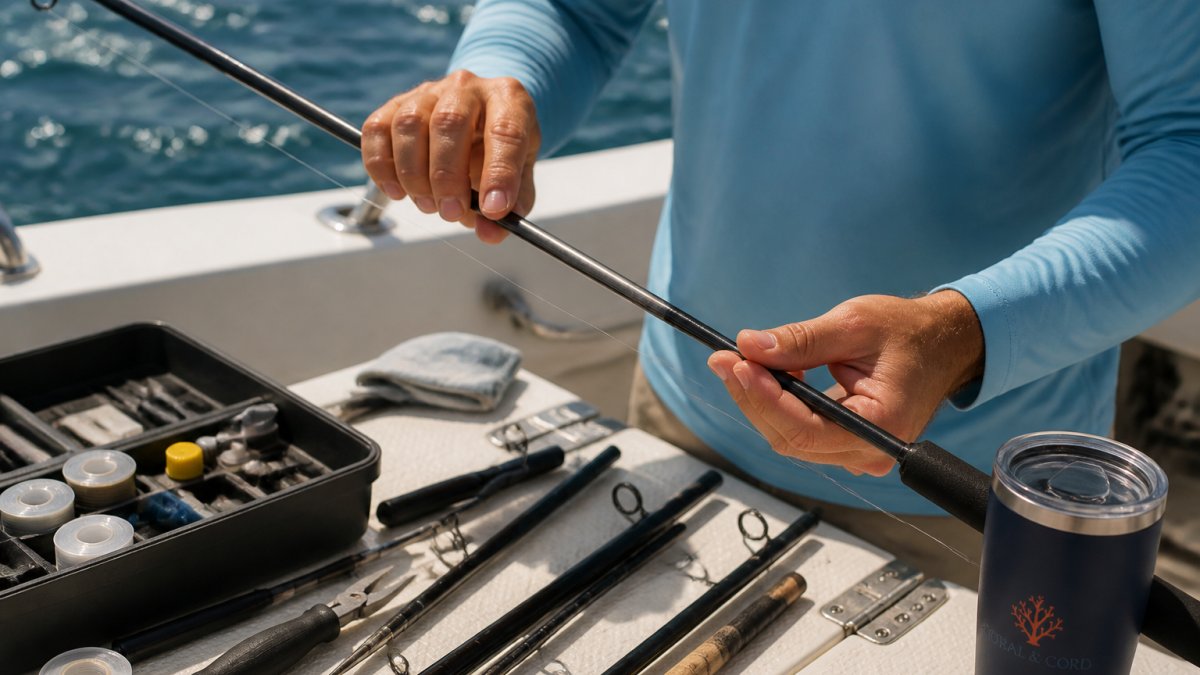
Run your hand along the blank and look for uneven sections, visible seams or a wavy finish. A good blank is straight and smooth. Flex it gently and listen for creaks.
Then check the guides, the metal rings the line runs through:
- Inserts: look for cracks or a loose fit. Ceramic inserts should sit flush in the frame.
- Frames: stainless steel frames resist corrosion better than plated ones. Check the welds or wraps.
- Alignment: all guides should sit in a straight line along the spine of the rod.
Finally, the grip. Cork should be tight with no filler patches. EVA foam should feel firm, not spongy. A loose grip will twist under load.
How to Inspect a Used Fishing Rod Before You Buy
A used fishing rod is worth buying only if the blank, guides and reel seat pass a hands-on check. Most problems hide in places sellers don't mention.
Here's the checklist we'd run before handing over cash:
- Flex the rod through its full curve and listen for cracking sounds
- Shine a light through every guide insert for cracks
- Check the thread wraps for fraying or lifting epoxy
- Twist the reel seat and check it locks firmly
- Look for rust stains around the guides, a sign of saltwater neglect
- Check the grip for soft spots or separation from the blank
A rod with one cracked guide is a repair job, not a bargain. Factor that cost in before you agree on a price.
What to Look for in a Fishing Reel
The three things that matter most in a fishing reel are the drag system, the bearings and the body material. A reel with a smooth drag and a sealed body will outlast one with more bearings but sloppy construction.
Spin the handle. It should turn smoothly with no grinding or tight spots. Then check the details.
Drag, Bearings and Body Material
Drag is the system that lets line out under pressure. A quality drag feels smooth from loose to locked, with no jerking. Pull line off by hand and feel for stutter.
Bearings reduce friction, but count isn't everything. Three good bearings beat ten cheap ones. Look for stainless or sealed bearings, which resist salt and grit.
Sunset Current Long Sleeve Shirt →
Body material tells you a lot. Metal bodies hold alignment better under load than graphite or plastic. Sealed bodies keep saltwater out, which is the single biggest killer of reels.
Quality Fishing Clothing: What Separates Good Gear from Good Looks
Quality fishing clothing is defined by its sun protection rating, fabric construction and seam work, not by its print. Good looks are a bonus. Performance is the requirement.
Here's what to inspect:
- UPF rating: look for a stated UPF 50+ rating on the label. That's the top tier of sun protection.
- Fabric: moisture-wicking, quick-dry fabric keeps you comfortable through a long day.
- Seams: flatlock seams sit flat against the skin and resist chafing.
- Coverage: long sleeves and a hood add protection where it counts.
Our Sunset Current Long Sleeve Shirt is built on UPF 50+ quick-dry fabric with flatlock seams, and the Mangrove Roots Hooded Shirt adds a hood and built-in face coverage for long mornings on the water. The reef-inspired artwork is the fun part. The fabric spec is the part that keeps you out there longer.


Where to Find Reliable Fishing Gear
Reliable fishing gear comes from specialist tackle shops, reputable online retailers and brands that publish their specifications. The common thread is transparency: if a seller can't tell you what a product is made of, walk away.
Ask these questions before buying anywhere:
- Does the listing state the materials and ratings?
- Is there a warranty or returns policy?
- Can you inspect the item before purchase?
Specialist stores tend to stock gear they can stand behind. Large chain stores are fine for basics, but check the details yourself. Online, read the spec sheet, not just the photos.
Common Mistakes When Judging Fishing Gear Quality
The biggest mistake buyers make is judging gear by price or brand alone. Both are shortcuts that skip the actual inspection.
Other traps to avoid:
- Assuming more bearings means a better reel. Construction matters more than count.
- Ignoring the guides. They're the cheapest part to replace and the most common failure point.
- Buying clothing on looks. Check the UPF rating and seams first.
- Skipping the flex test on used rods. A creak means a hidden crack.
- Trusting "saltwater resistant" without a sealed body. Resistance isn't the same as sealing.
Conclusion
Spotting quality fishing gear takes practice, but the checks are simple: flex the rod, feel the drag, read the fabric label. Do those three things and you'll avoid most bad buys.
When you're ready to gear up for long days on the water, Coral & Cord builds reef-inspired fishing clothing on UPF 50+ quick-dry fabric with flatlock seams and full coverage options. Join the Tide for launch updates and exclusive offers, and get gear that works as hard as you do.
Frequently Asked Questions
How can you tell if a fishing rod is good quality?
Run your fingers along the rod blank and check for smooth, even finish with no flat spots or bubbles. Look at the guides: quality guides have clean wraps, no rust and smooth inserts that won't fray your line. Flex the rod gently and listen for cracking sounds. A well-made rod flexes evenly along its length and returns straight. Check that the reel seat tightens firmly and the grip feels solid, not spongy. These checks take two minutes and tell you more than any price tag.
What should you check when buying a fishing reel?
Spin the handle and feel for smooth rotation without grinding or wobble. Check the drag by pulling line off against tension; it should release evenly, not in jerks. Look at the body material: metal frames resist flex better than plastic under load. Count the bearings but don't rely on that number alone, since placement matters more than quantity. Finally, check that the spool sits flush and the bail snaps over cleanly. A reel that fails any of these tests will let you down on the water.
What should you look for in quality fishing clothing?
Start with the UPF rating, which should be clearly stated as UPF 50+. Check the fabric weight and feel: quality fishing clothing uses moisture-wicking, quick-dry material with flatlock seams that won't rub under a lifejacket or pack strap. Look for reinforced stitching at stress points and a fit that allows casting without riding up. Reef-inspired designs like those from Coral & Cord show that quality fishing gear can look good and perform.
Is expensive fishing gear always better?
No. Price reflects brand positioning as much as build quality. A $200 rod can outperform a $400 one if the guides, blank and reel seat are better made. Judge gear on the specific components: smooth guide inserts, even blank flex, sealed reel drags and fabric that holds its UPF rating after washing. Mid-range gear from makers who publish their specifications often beats premium gear sold on name alone. Inspect before you buy rather than assuming a higher price means better quality fishing gear.