
Are Fishing Pullovers for Men Worth It? A Buyer's Guide
Last Updated: October 30, 2026
Quick Summary
Fishing pullovers are worth it as a mid-layer worn over a base layer and under a shell, trapping warmth without bulk and breathing as the day warms up. Choose a lightweight version for mild days or fleece for cold starts, and buy for the layer you will wear underneath.
- A pullover sits in the middle of your system, not touching skin and not your rain defence.
- UPF 50+ allows roughly one-fiftieth of UV radiation through, the highest commonly labelled rating.
- A mid-weight fleece under a shell traps heat better than a bulky one worn alone.
- The three-layer system is a moisture-wicking base, a pullover mid layer and a windproof shell.
- Most committed anglers end up owning both lightweight and fleece pullovers as seasons change.
Table of Contents
- What a Fishing Pullover Actually Does for You on the Water
- UPF Fishing Shirts for Men: The Sun Protection Layer That Matters
- Lightweight Fishing Pullover: The Warm-Weather Workhorse
- Fleece Fishing Pullover: When the Temperature Drops
- How to Layer Fishing Clothes in Winter Without Overheating
- Fishing Pullovers for Men Compared: Fit, Fabric and Trade-Offs
- Mistakes That Make a Good Pullover Feel Wrong
- Join the Tide and Find Your Water Layer
- Frequently Asked Questions
What a Fishing Pullover Actually Does for You on the Water
A fishing pullover is a mid-layer garment worn over a base layer and under a shell, built to manage warmth, sun exposure and moisture during long hours on the water. Coral & Cord designs reef-inspired fishing apparel around one idea: the right layer should work as hard as you do. Most anglers overpack. They carry a heavy jacket for a cool start, then sweat through it by nine in the morning. A pullover solves that problem because it traps warmth without bulk, breathes when the sun climbs, and comes off in seconds when the day turns.
The key distinction is that a pullover sits in the middle of your system. It is not your outer defence against rain, and it is not the fabric touching your skin. Get that placement right and everything else follows.
UPF Fishing Shirts for Men: The Sun Protection Layer That Matters
Sun protection is where most buyers focus, and rightly so. Long hours on open water expose you to direct sun plus reflection off the surface, which compounds the dose. UPF fishing shirts for men are rated garments that block a stated proportion of UV radiation from reaching your skin. For help picking the right one, see this practical guide to choosing UPF fishing apparel.
What a UPF Rating Actually Tells You
A UPF rating is a measure of how much ultraviolet radiation a fabric blocks. UPF 50+ means the fabric allows roughly one-fiftieth of UV radiation through, which is the highest rating category commonly labelled. Two things matter more than the number on the label: coverage and fit. A loose, long-sleeve shirt with a collar protects more skin than a tight tee with a high rating.
Watch out: a rating printed on a tag is not a lifetime guarantee. Stretch, wear and repeated washing all affect how much protection a fabric delivers, so check the care instructions and replace garments that have thinned out.
Lightweight Fishing Pullover: The Warm-Weather Workhorse
The lightweight fishing pullover is the layer you will reach for most often. It earns its place on mild mornings, breezy afternoons and long runs where the temperature swings but never gets cold enough for fleece.
What separates a good lightweight pullover from a mediocre one comes down to three things:
- Fabric weight and breathability: it should cut wind without trapping heat.
- Quick-dry performance: spray and sweat should disappear, not sit against your skin.
- Freedom of movement: a cut that lets you cast, net and drive a boat without riding up.
This is also the layer where sun protection and comfort overlap. A lightweight pullover with a UPF rating does double duty, so you carry less.
Fleece Fishing Pullover: When the Temperature Drops
A fleece fishing pullover is your cold-start layer. It holds warmth close to the body, dries faster than cotton, and keeps working if it gets damp. The mistake most anglers make is buying fleece that is too thick. A mid-weight fleece under a shell traps heat far better than a bulky one worn alone, and it vents more predictably when the sun comes up.
Where fleece falls short is coverage at the neck and face. On a cold, bright morning, exposed skin takes the worst of it. That is where a hooded layer earns its keep. Browse hooded fishing shirts with built-in face coverage for long offshore runs.
How to Layer Fishing Clothes in Winter Without Overheating
Overheating in winter is more common than being cold, because most anglers dress for the air temperature at the ramp and forget everything that happens after. Learning how to layer fishing clothes in winter comes down to managing heat you generate, not just heat you lose.
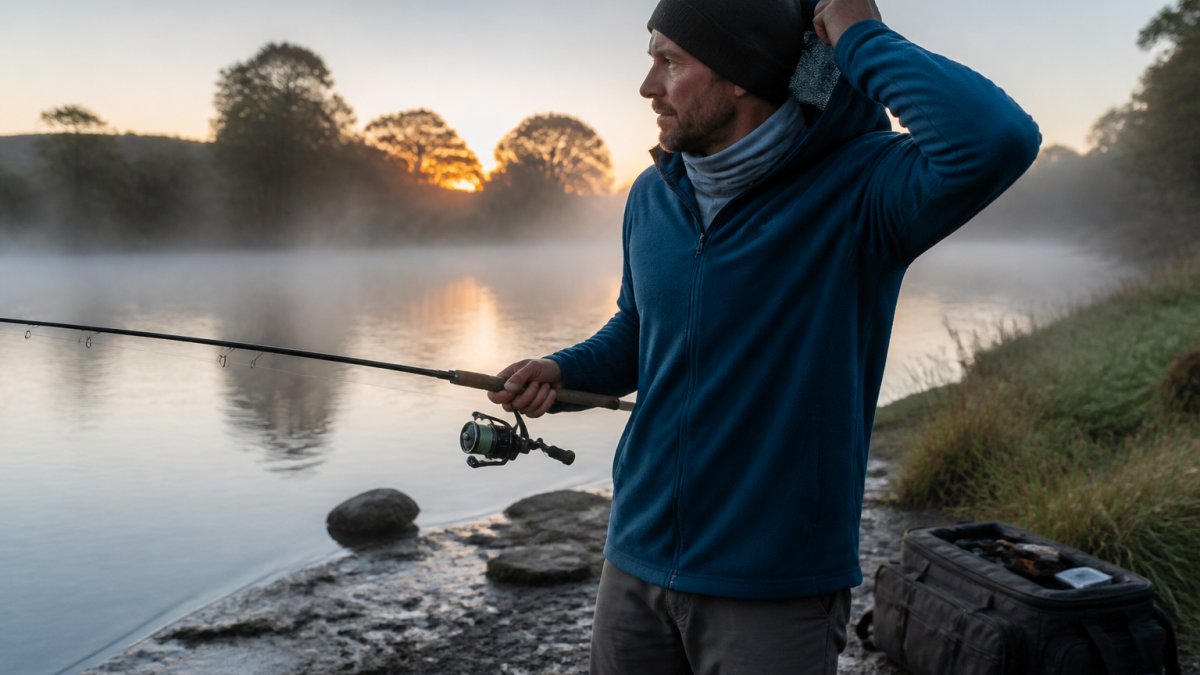
The Three-Layer System That Works
- Base layer: a moisture-wicking thermal that moves sweat away from skin. Never cotton.
- Mid layer: your fishing pullover, fleece or lightweight depending on conditions.
- Shell: a windproof, waterproof outer layer you add and remove as the weather shifts.
The rule is simple: adjust before you sweat, not after. If you feel warm on the run out, shed the mid layer early. You can always add it back.
Fishing Pullovers for Men Compared: Fit, Fabric and Trade-Offs
Choosing between styles is really a question of what your day looks like. The table below sets out the practical differences.
| Style | Warmth | Sun Coverage | Best For | Main Trade-Off |
|---|---|---|---|---|
| Lightweight pullover | Low | High with UPF fabric | Mild days, active casting | Less warmth on cold starts |
| Fleece pullover | High | Moderate | Cold mornings, winter sessions | Can overheat once the sun climbs |
| Hooded shirt | Medium | Highest, includes face | Offshore runs, bright conditions | Hood can feel warm in still air |
The honest answer is that most committed anglers end up owning both, because the right layer changes with the season rather than the trip. If you are still deciding, this comparison of long sleeve versus hooded fishing shirts sets out the fit and feature trade-offs.
Mistakes That Make a Good Pullover Feel Wrong
The most common complaint about fishing pullovers is not the fabric. It is the fit. A pullover that is too tight restricts your cast and traps sweat; one that is too loose lets wind straight through and bunches under a shell. Buy for the layer you will wear underneath, not the shirt you are wearing in the shop.
Three mistakes worth avoiding:
- Sizing for a single season. A winter mid layer needs room for a thermal beneath it.
- Ignoring the neck and cuffs. These are where wind and spray get in first.
- Skipping the care label. Heat and harsh detergents shorten the life of technical fabrics.
If you are unsure, measure a shirt that fits you well and compare it against the size chart.
Join the Tide and Find Your Water Layer
The right layering system changes a long day on the water from a test of endurance into something you actually enjoy. Build it around a base layer, a pullover that matches your conditions, and a shell you can add or shed as the weather turns. Get those three right and you stop thinking about what you are wearing and start thinking about the fishing.
At Coral & Cord, we build reef-inspired fishing apparel for people who spend real time on the water. Our gear is designed for life on the water. Join the Tide for launch updates and exclusive launch offers.
Frequently Asked Questions
What should you look for in fishing pullovers for men?
Prioritise fabric and fit over branding. Look for a UPF rating on summer layers, a breathable weave that dries fast, and flat seams that won't rub under a sling or rod butt. Check whether the pullover is cut to move with you when casting, not just when standing still. A zip neck helps you dump heat quickly, and a hood or high collar keeps spray and sun off your neck. Weight matters too: a lightweight layer for warm days and a fleece option for cold starts covers most conditions.
What does UPF mean in fishing clothing?
UPF stands for Ultraviolet Protection Factor and measures how much UV radiation passes through fabric. A UPF 50 rating means roughly one fiftieth of UV rays reach your skin, which is the highest rating commonly labelled. Unlike sunscreen, UPF is built into the fabric, so it doesn't wear off with sweat. It can still degrade if the garment is stretched thin or washed harshly, so follow care instructions and retire anything that has gone see-through in sunlight. Check the label for a stated rating rather than assuming dark fabric is enough.
Is a fleece pullover suitable for fishing?
Yes, as a mid-layer rather than an outer shell. Fleece traps warmth and stays comfortable when damp, which suits cold mornings on the water. The catch is wind: fleece alone lets breeze straight through, so pair it with a windproof or waterproof outer layer. Avoid bulky fleece if you're casting repeatedly, since excess fabric at the forearm catches line. A mid-weight fleece fishing pullover with a quarter zip gives you the warmth without the bulk, and you can vent it when the sun comes out.
How should a fishing pullover fit?
Snug enough to stay out of your way, loose enough to layer underneath. The shoulders should let you cast without the hem riding up, and the sleeves shouldn't bunch at the wrist when you're working a lure. Try it on over the base layer you'd actually wear, and check that the hood or collar doesn't block your peripheral vision. If you're between sizes, size up for winter layering and stay true to size for a summer UPF layer worn against the skin.
