
Are Performance Fishing Shirts Worth It for Coastal Trips?
Last Updated: October 28, 2026
Quick Summary
Performance fishing wear is worth the price for anglers who fish coastal waters often, since its moisture-wicking, UV-blocking and quick-drying fabrics cope with salt spray and sun far better than cotton. Occasional anglers may find ordinary clothing adequate. The care routine you follow matters as much as the purchase itself.
- Standard cotton absorbs spray and takes hours to dry, while performance fabrics move moisture to the surface to evaporate.
- UPF-rated shirts block UV, and water and light surfaces reflect exposure back up at you from more than one direction.
- Wicking depends on airflow, so a shirt may feel clammy in a sheltered creek with no wind.
- Rinse salt out after each trip, avoid high-heat drying and follow the care label to keep performance intact.
- Build a wardrobe of two or three versatile shirts and rotate them so each dries fully between trips.
Table of Contents
- Why Coastal Conditions Demand More From Your Clothing
- What Performance Fishing Wear Actually Does
- Moisture-Wicking Fishing Shirts: How the Fabric Works
- UPF Fishing Shirts and Sun Protection on the Water
- Quick-Dry Fishing Clothing for Changeable Weather
- Durable Saltwater Fishing Clothing: What Lasts Through Salt and Sun
- Choosing and Caring for Your Coastal Fishing Wardrobe
- Frequently Asked Questions
- Pick Your Next Coastal Layer With Coral & Cord
Why Coastal Conditions Demand More From Your Clothing
Coastal fishing punishes ordinary clothing. Salt spray, reflected sun off the water, sudden wind changes and hours spent kneeling on wet rock all wear fabric down faster than a day on the lawn. Most anglers discover this the hard way, usually after a favourite shirt has faded, stiffened or started to smell by the third trip.
That is the real question behind performance fishing wear for coastal adventures: not whether it looks good, but whether it holds up. The short answer is that performance shirts earn their price for some anglers and not others, and the difference comes down to how and where you fish.
What Performance Fishing Wear Actually Does
Performance fishing wear is clothing built around three jobs: managing moisture, blocking UV and drying quickly once wet. A standard cotton tee does none of these well. It absorbs sweat and spray, stays cold when wet and takes hours to dry in humid air.
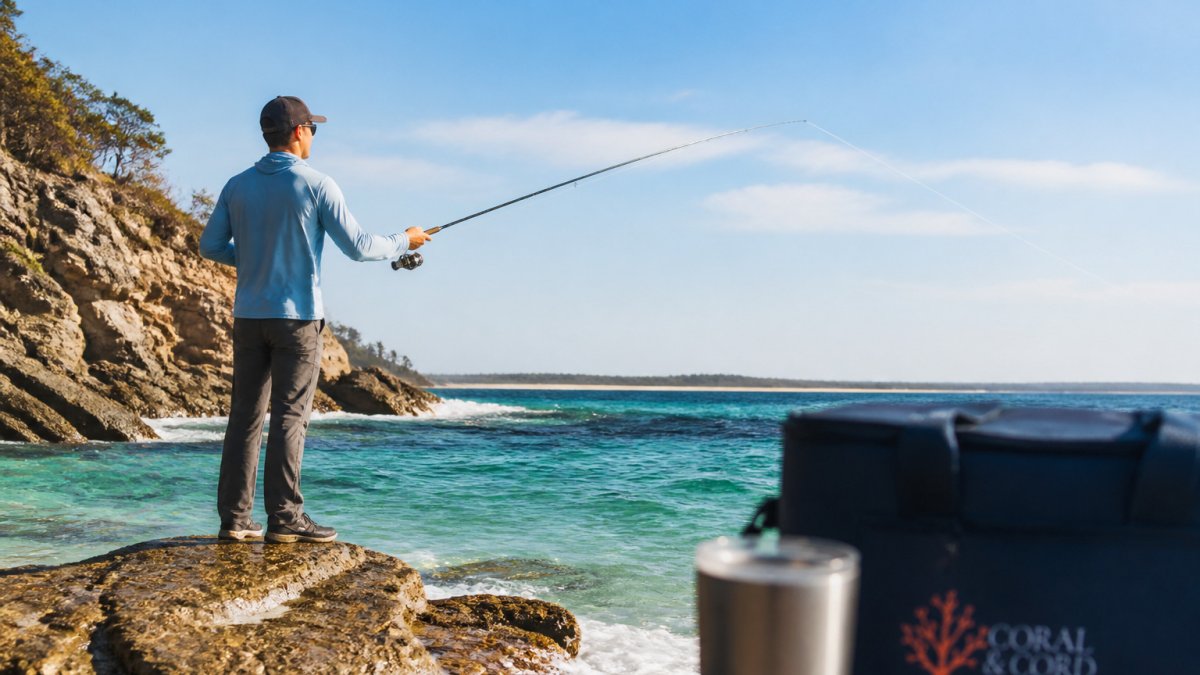
Performance garments use synthetic fibres engineered to move moisture away from the skin and spread it across the fabric surface, where it evaporates. The practical result is a shirt that feels lighter and cooler during a long session in the sun. Treat that as a functional benefit, not a guarantee of comfort in every condition, because heat, humidity and effort all change how a shirt performs.
Watch out: a performance shirt that is never washed according to its care label loses much of what it was built for, so the care routine matters as much as the purchase.
The article's core claims about what performance garments do can be scanned at a glance:
| Job | Standard cotton tee | Performance garment |
|---|---|---|
| Moisture | Absorbs sweat and spray | Moves moisture to the surface to evaporate |
| Sun | No UV blocking described | Blocks UV, as a UPF-rated fabric |
| Drying | Takes hours in humid air | Dries quickly once wet |
| Cooling | Stays cold when wet | Feels lighter during long sun exposure |
Moisture-Wicking Fishing Shirts: How the Fabric Works
Moisture-wicking fishing shirts rely on fibre structure and weave rather than thickness. Tightly knitted synthetics pull sweat outward, so the outer surface of the shirt is wet enough to evaporate while the layer against your skin stays drier. This is why a moisture-wicking shirt can feel cooler than cotton even when you are sweating heavily.
The limit is that wicking depends on airflow. A shirt that wicks well on a breezy headland may feel clammy in a sheltered mangrove creek with no wind at all. Choose the fabric for the conditions you fish most often, and expect it to perform best under layers that let air circulate.
UPF Fishing Shirts and Sun Protection on the Water
UPF fishing shirts are rated by ultraviolet protection factor, which indicates how much UV radiation the fabric blocks. Water and light-coloured surfaces reflect a significant amount of UV back up at you, so coastal anglers receive exposure from more than one direction. Long sleeves and a high-UPF fabric cover the areas that sun exposure most affects.
For a closer look at how these shirts perform specifically in local conditions, see our guide on whether UPF clothing actually works in Australian waters.
Quick-Dry Fishing Clothing for Changeable Weather
Quick-dry fishing clothing is valuable where weather shifts quickly, which is common on the coast. A shirt that gets soaked by a wave or caught in a sudden shower will dry in a fraction of the time a cotton alternative needs, so you stay more comfortable and less prone to chafing.
Quick drying also helps after a day on the water. Garments that dry overnight can be worn again the next morning without the damp, cold feeling that makes a second day unpleasant. The benefit is real, but it is strongest for people who fish frequently and in rough conditions.
Durable Saltwater Fishing Clothing: What Lasts Through Salt and Sun
Durable saltwater fishing clothing has to survive salt crystals, UV exposure and frequent washing. Salt is abrasive and can dull colour and stiffen fibres over time, so the construction of the garment, including seams, stitching and fabric weight, shapes how long it lasts. See which fishing shirts are built for reef conditions.
Once you have chosen a durable shirt, the way you look after it decides how well it keeps its performance. Read our practical guide to washing performance fishing gear to keep the fabric working for longer.
Choosing and Caring for Your Coastal Fishing Wardrobe
Build your coastal fishing wardrobe around two or three versatile shirts rather than a large collection of single-use pieces. Rotate them so each one has time to dry fully between trips, which extends fabric life and preserves UV protection.
Rinse salt out of garments after each trip with fresh water, avoid high-heat drying that can weaken synthetic fibres, and follow the care label for detergent and temperature. Check whether your UPF shirt keeps its protection after washing and wear. Anglers who do this consistently tend to get far more value from performance wear than those who wash it with heavy loads at high heat.
Frequently Asked Questions
What should you wear for a day of coastal fishing?
For a day of coastal fishing, wear a long-sleeved performance shirt with UPF protection, quick-dry shorts or trousers, and footwear with a grippy sole that drains well. Pair these with a hat that shades your neck and ears, and sunglasses with polarised lenses. Layer a light windproof jacket for cool mornings or sea breezes, and pack a spare dry top. Choose lighter colours to stay cooler, and avoid cotton, which holds moisture and stays damp against your skin long after you have been in the spray or sweating.
Are UPF fishing shirts worth wearing?
UPF fishing shirts are worth wearing if you spend several hours a day in sun and reflected light on the water. A UPF rating shows how much ultraviolet radiation the fabric blocks, so a shirt rated UPF 50+ blocks most UV that reaches the skin. Covering your arms and shoulders reduces the area that needs sunscreen, which helps when sunscreen washes off with sweat or spray. Check that the rating is stated by the manufacturer and look for care instructions, since UPF can weaken if a fabric is worn out or washed harshly.
How should fishing clothes fit for comfort and movement?
Fishing clothes should fit close enough that loose fabric does not catch on rods, reels or rigging, but not so tight that it restricts casting. Look for raglan or articulated sleeves, which allow a full overhead cast, and a slightly longer back hem so the shirt stays tucked when you bend or reach. Test movement in the fitting room by raising both arms, reaching forward and twisting your torso. Remember that a damp fabric can cling more than a dry one, so allow a little extra room in the chest and shoulders.
How do you wash and care for performance fishing wear?
Wash performance fishing wear in cold or lukewarm water on a gentle cycle, and rinse off salt before the garment dries. Avoid fabric softener, which coats synthetic fibres and reduces their ability to wick moisture. Dry the garment in the shade or on a line rather than in a hot dryer, as heat can weaken UPF treatments and elastic. Wash items after each trip where possible, because salt and sunscreen residue build up over time and can shorten the life of the fabric.
Pick Your Next Coastal Layer With Coral & Cord
If you are ready to choose a shirt, browse the Ribbon Reef collection and compare the fabric and fit details for yourself. For current prices and availability, check the Coral & Cord website directly, as pricing varies by product and stock. Sign up to Join the Tide for launch updates and exclusive launch offers.
